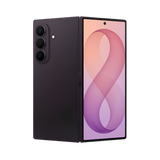
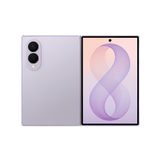
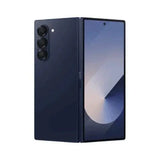
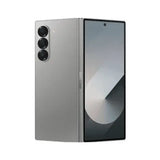

Galaxy Z Fold 8 Hinge Durability: What Breaks First
How durable is the Galaxy Z Fold 8 hinge, and what fails first: hinge, inner screen or crease? Repair costs and the case features that actually help.
 Editorial

The short answer
Galaxy Z Fold 8 hinge durability is rarely the problem. Samsung rates the Galaxy Z Fold 8's hinge for 500,000 folds, roughly 13 years at 100 folds a day. It hasn't published a fold rating for the Z Fold 8 Ultra's Armor FlexHinge. On both models, what breaks first is usually the inner screen or grit getting into the hinge, not the mechanism wearing out.
Up front: We design cases for the Galaxy Z Fold line. That is a commercial interest, and you should read this knowing it. But the failure modes below are not our opinion: they come from Samsung's own IP rating, Samsung's own repair pricing, Samsung's own warranty terms, and published durability testing. Where something is our judgement rather than documented fact, we say so. Updated 29 September 2026.
Most "is the Z Fold durable" articles are written by people who have never had to design a part that fits one. This is the ranked list of what actually fails on a Galaxy Z Fold 8 and Z Fold 8 Ultra, ordered by cost to you rather than by how often it gets talked about, and what genuinely reduces each risk. If you're here to choose protection, our best Galaxy Z Fold 8 cases guide has picks for both models.
The short version
| # | Failure mode | Cost if it happens | Preventable? |
|---|---|---|---|
| 1 | Inner display damage | ~US$890 panel | Partly |
| 2 | Hinge dust ingress | $350–500 hinge, often the display too | Largely |
| 3 | Removing the factory film | Voids screen warranty | Completely |
| 4 | Cover display / camera glass | ~US$611 cover panel | Largely |
| 5 | Charging port wear | Low, but inconvenient | Partly |
Notice what is not on this list: the hinge mechanism wearing out. The folding mechanism is not the weak point. What gets inside it is.
Galaxy Z Fold 8 hinge durability: the numbers
How many times can you fold a Galaxy Z Fold 8?
Samsung rates the Galaxy Z Fold 8's hinge for 500,000 folds, which is roughly 13 years at 100 folds a day. That rating is for the wide Galaxy Z Fold 8; Samsung hasn't published a fold rating for the Z Fold 8 Ultra. A fold rating is a lab cycle count on a clean hinge, so it tells you the mechanism is unlikely to wear out. It doesn't cover drops, pressure on the crease or grit getting inside.
How durable is the Z Fold 8 Ultra's hinge?
Samsung describes the Ultra's Armor FlexHinge as thin but very rigid, thanks to a highly durable material, but it hasn't published a fold-cycle rating or named the material. Samsung says the refined hinge on the Ultra is thinner and narrower than before, with reduced friction for smoother opening and closing, and that it helps the fold area look flatter. What the hinge design doesn't change is the IP48 rating: the phone still isn't sealed against fine dust, which is failure mode 2 below. You can browse hinge-cover cases for this model in our Galaxy Z Fold 8 Ultra collection.
How durable is the Gorilla Glass on the Z Fold 8?
Both Z Fold 8 models use Corning Gorilla Glass Ceramic 3 on the cover screen and Gorilla Glass Victus 2 on the back. In Corning's own lab tests, Ceramic 3 survived drops of more than two metres onto a surface replicating concrete, and at least 20 repeated drops onto a surface replicating asphalt. Those are Corning's lab results, not a guarantee, and a corner landing can still crack it. The inner screen isn't protected by Gorilla Glass: it uses ultra-thin glass under a factory-fitted protective layer.
1. Inner display damage: the expensive one

The inner foldable panel is the single most expensive component on the phone. A replacement foldable panel for the Galaxy Z Fold 7 runs about €761 (~US$890) in genuine Samsung parts, before any labour. The cover display is about €525 (~US$611). Samsung's parts pricing for the Z Fold 8 models isn't in the figures we've sourced, so treat the Z Fold 7 numbers as the guide.
To put that in perspective: that one Z Fold 7 part is more than 40% of the Z Fold 8 Ultra's US$2,099 starting price.
How it fails. Three distinct ways, often confused with each other:
- Impact. Cracked or spider-webbed inner glass after the phone is dropped open. The obvious one.
- Fold-line degradation. Persistent black bars or dead touch zones along the crease. Usually the endpoint of a slow process, not a single event.
- Contamination-driven. The inner display is physically connected to the hinge assembly. A compromised hinge can pull on the display itself. This is why hinge problems and screen problems tend to arrive together; see failure mode 2.
What actually reduces the risk. The inner display is only exposed when the phone is open. So the meaningful protections are: never putting the phone down open where it can be knocked, not pressing hard on the crease, and keeping the hinge clean so the display is not being mechanically stressed from below.
What a case can and cannot do here. Honestly: a case does very little for the inner display directly. Any brand telling you their case protects the inner screen is overselling. What a case does is control how the phone lands when dropped, which changes whether the hinge takes the impact. That matters, but claim it accurately.
2. Hinge dust ingress: what really ends a Fold 8 hinge

This is the failure mode we would flag hardest, and the one most buyers underestimate.
Both the Galaxy Z Fold 8 and the Z Fold 8 Ultra carry an IP48 rating. Most people read that as "it's water and dust resistant." Read the first digit properly:
- 4 = protected against solid objects larger than 1mm. Not fine dust. Not sand. Not pocket lint broken down small enough.
- 8 = withstands immersion to 1.5m for 30 minutes.
So the water side is genuinely good. The dust side is the weak link, and it has been the weak link across the entire Z Fold generation: commentators have criticised Samsung for not moving to IP6x dust protection on foldables. Once grit gets inside the hinge, published repair-industry commentary describes failure as a matter of when, not if.
The early warning sign. Increased play at partially open angles, felt as a slight wobble when you hold the phone at about 90 degrees. Some settling in the first 12–18 months is normal. A wobble that appears suddenly, or grit you can feel or hear when folding, is not.
Cost when it goes. Out-of-warranty hinge repair has been reported around $350–500 at Samsung service centres, and because the display is bonded into the hinge assembly, an inner display replacement is frequently required alongside it. That is where you end up looking at a four-figure repair on a phone that started at US$2,099 (Z Fold 8 Ultra) or US$1,899 (Z Fold 8).

What actually reduces the risk. This is where behaviour and hardware both genuinely matter:
- Do not carry the phone loose in a pocket with keys, coins, or sand. The single biggest controllable factor.
- Fold the phone closed before putting it in a bag.
- Do not use compressed air on the hinge; it drives particles further in.
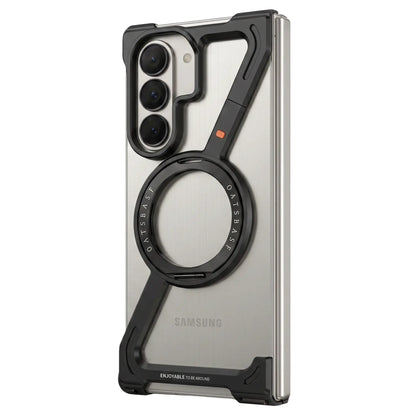
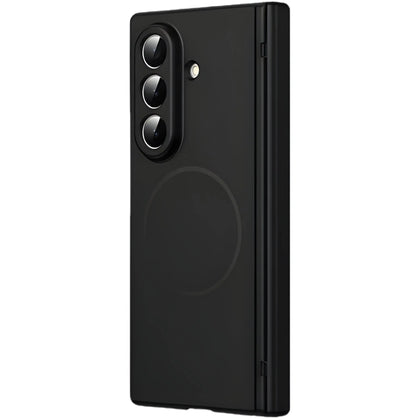
- A hinge cover case is the one case feature with a direct, defensible link to this failure mode. It physically shrouds the spine so debris has less opportunity to reach the hinge gap. It is not a seal and no case makes the phone IP6x, but reducing exposure is a real mechanism, not a marketing claim.
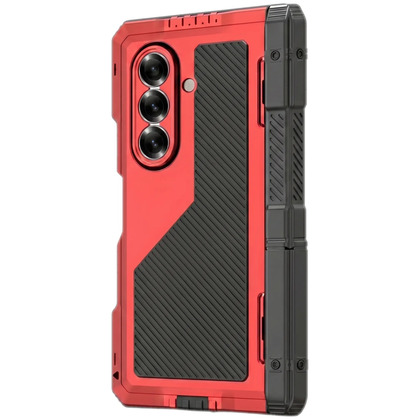
From our lineup, three hinge-cover designs are made for both the Z Fold 8 Ultra and the Z Fold 8: Spineguard P1, with a spring-loaded spine cover that moves with the fold so the hinge stays covered open, closed or in between; Axon M2, with a rigid wrap-around hinge cover and an alloy frame; and Sentinel H1, a hinge cover case with a shock-absorbent polycarbonate shell. Browse the full ranges for the Galaxy Z Fold 8 Ultra and the Galaxy Z Fold 8.
3. Removing the factory film: the entirely self-inflicted one
Every Galaxy Z Fold ships with a Samsung-applied protective film bonded to the inner display. It sits directly on the Ultra Thin Glass layer that lets the panel fold.
People peel it off because the edges lift over time and it looks untidy. Do not.
Samsung now prints a warning label directly on the film because of how widespread the damage became. Removing it exposes the OLED surface to direct contact and causes immediate, irreversible damage and, per Samsung's guidance, voids the screen warranty. Samsung's own care documentation instructs users not to remove the protective top layer from the main screen, and not to attach adhesive accessories such as third-party protectors or stickers to it.
If your film starts peeling at the edges, the correct route is a Samsung service centre replacement of the film, not a kitchen-table peel.
And do not put tempered glass on the inner screen. Rigid glass cannot survive being folded; it also adds thickness at the crease that interferes with how the phone closes. The inner display and the cover display need completely different treatment: rigid protection is appropriate on the cover glass, never on the fold.

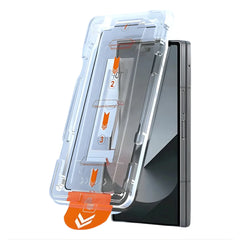
For the cover display, a proper 9H tempered protector is the right tool. Our Ion Glass screen protector comes in Z Fold 8 and Z Fold 8 Ultra versions and ships with a dust-free installation kit that exhausts air as you apply it, so the glass goes on without trapped dust or bubbles, the usual reason DIY applications fail.
4. Cover display and camera glass: the common one

This is the failure you are most likely to actually experience, because it is the surface facing outward when the phone is closed in your pocket or hand. Gorilla Glass Ceramic 3 on the cover screen is tougher than the Ceramic 2 used on the Z Fold 7, but it still isn't unbreakable.
It is also the cheapest of the display failures: roughly €525 (~US$611) for a genuine Z Fold 7 cover panel, versus ~$890 for the inner. Camera glass is cheaper again but is frequently damaged by the same events.
What actually reduces the risk. This is where cases do the most straightforward work, and where the claims are easiest to make honestly:
- A raised bezel around the camera island so the lenses never contact a flat surface when the phone is set down.
- Corner protection. Most cover-glass cracks originate at a corner impact, not a face impact.
- Tempered glass on the cover display, which unlike the inner display is a rigid panel and takes rigid protection perfectly well.
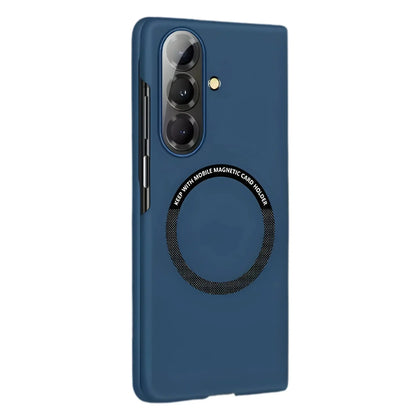
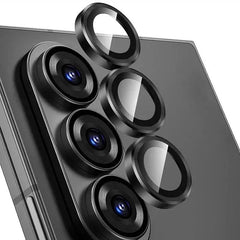
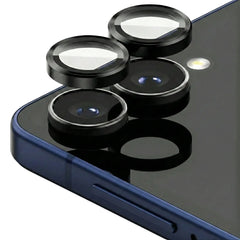
For camera-island and corner coverage, the shock-absorbent and rugged designs are the relevant ones: Sentinel H1 (Z Fold 8 and Z Fold 8 Ultra) and Vanguard H1 (Z Fold 8 Ultra), which has reinforced corners and raised edges. If you want minimal bulk while still getting a raised camera lip, Apex M3 is the slim option, with a 1.3 mm lip around the lenses. Dedicated lens protectors cover the glass itself, with separate cuts for the Z Fold 8 and Z Fold 8 Ultra camera islands.
5. Charging port wear: the quiet one

Least dramatic, least expensive, and rarely discussed. On a device this thin the USB-C port is shallow, and pocket lint compacts into it over months until the cable stops seating fully. Most "my phone stopped charging" cases on foldables are a packed port, not a failed one.
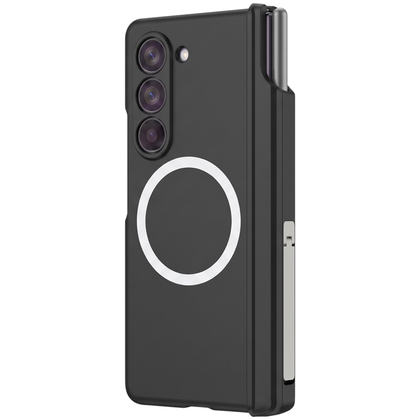
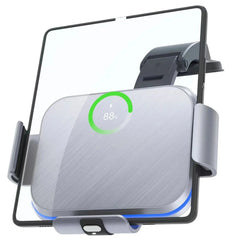
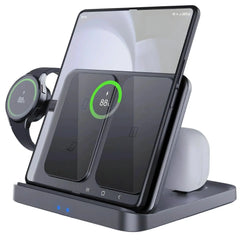
What helps. Wireless charging reduces port cycles considerably, and both Z Fold 8 models support 20W wireless charging. On a Z Fold, magnetic alignment comes from the case rather than the phone, so a case with a magnet ring is what makes wireless charging genuinely convenient rather than a fiddly compromise. If you do use the port daily, a case with a port cover is a reasonable option; Axon M1 and our other magnetic ring cases for the Z Fold 8 models use N52 MagSafe-compatible magnets, so you can go mostly wireless without a separate accessory. More on this in Does the Z Fold 8 have MagSafe? Wireless charging explained.
Is Samsung Care+ worth it?
Straight arithmetic, using published figures. Samsung Care+ for the Z Fold 7 was US$13/month or $259/year, with cracked screen and back glass repairs at $29.
One inner display replacement out of warranty is ~$890. So Care+ pays for itself if you have a single inner-screen incident within about 3.4 years. Given the inner panel is the most expensive component and the hinge failure mode can take the display with it, that is not a remote scenario on a device you intend to keep.
We sell cases and we still think Care+ is rational on a foldable in a way it usually is not on a slab phone. A case and insurance address different risks: the case reduces the frequency of incidents, the insurance caps the cost of the ones that happen anyway. Neither replaces the other.
We are not an insurance adviser and Care+ pricing and terms vary by market. Check current pricing for your region and model before deciding.
What we would actually tell a new Z Fold 8 owner
- Leave the factory film alone. Free, and the single highest-consequence mistake available to you.
- Treat the hinge as the thing you are protecting, not the screen. IP48 is not dust-proof. Keys and sand are the enemy.
- Put tempered glass on the cover display only. Never the inner one.
- Get a case with a raised camera bezel, whatever brand. Camera glass damage is the most likely thing to actually happen to you.
- Consider a hinge cover case if you carry the phone in a pocket or bag with anything abrasive.
- Do the Care+ arithmetic for your market rather than assuming.
Still choosing a phone? Durability is similar across the pair, and our Z Fold 8 vs Z Fold 8 Ultra comparison covers the differences that do matter.
Galaxy Z Fold 8 durability FAQ
How many times can you fold a Galaxy Z Fold 8?
Samsung rates the Galaxy Z Fold 8's hinge for 500,000 folds, roughly 13 years at 100 folds a day. That figure is for the wide Galaxy Z Fold 8; Samsung hasn't published one for the Z Fold 8 Ultra. In practice the mechanism is rarely what fails first. Grit getting into the hinge is.
How durable is the Z Fold 8 Ultra's hinge?
Samsung hasn't published a fold rating for it. It describes the Ultra's Armor FlexHinge as thin but very rigid thanks to a highly durable material, and says the refined hinge is thinner, narrower and lower-friction than before. Like the rest of the phone it's rated IP48, so it isn't sealed against fine dust.
How does the Armor FlexHinge improve the Z Fold 8 Ultra's durability?
Samsung says the Armor FlexHinge is designed to be thin but very rigid, using a highly durable material, and on the Ultra it's thinner and narrower with reduced friction. That helps the fold area sit flatter and the phone open smoothly. Samsung hasn't published a fold-cycle figure or named the material, so treat it as a design improvement rather than a rating.
How durable is the Gorilla Glass on the Z Fold 8?
Both models use Gorilla Glass Ceramic 3 on the cover screen and Gorilla Glass Victus 2 on the back. In Corning's lab tests, Ceramic 3 survived drops of more than two metres onto concrete-like surfaces and at least 20 drops onto asphalt-like ones. Those are lab results, not a guarantee, and the inner screen uses ultra-thin glass instead.
Is the Galaxy Z Fold 8 dustproof?
No. Both the Z Fold 8 and Z Fold 8 Ultra are rated IP48. The "4" means protection against solid objects larger than 1mm only; it is not rated against fine dust or sand. The "8" means it withstands immersion to 1.5m for 30 minutes, so water resistance is genuinely strong. Dust is the weak point.
How much does it cost to replace a Galaxy Z Fold inner screen?
A genuine Samsung foldable panel for the Z Fold 7 is around €761 (~US$890) for the part alone, before labour. The cover display is around €525 (~US$611). Samsung's Z Fold 8 parts pricing isn't in the figures we've sourced, so use the Z Fold 7 numbers as a guide. Samsung Care+ reduced a Z Fold 7 cracked screen repair to about $29.
Can I remove the screen protector on my Galaxy Z Fold inner display?
No. The factory film is bonded to the Ultra Thin Glass layer. Samsung prints a warning on the film, removing it causes irreversible damage to the OLED surface, and per Samsung's guidance it voids the screen warranty. If it peels, have a Samsung service centre replace it.
Can I put tempered glass on the Galaxy Z Fold 8 inner screen?
No. Rigid tempered glass cannot survive repeated folding and adds thickness at the crease that interferes with closing. The inner screen already has a factory-fitted protective layer, so leave that in place. Tempered glass belongs on the cover display only, where a 9H protector is the right tool.
Does a case actually protect a foldable phone?
Partly, and it is worth being precise. A case meaningfully reduces cover-glass and camera-glass damage, and a hinge cover reduces debris exposure at the spine. A case does very little for the inner display, which is only exposed when the phone is open. Treat any brand claiming full inner-screen protection with scepticism.
What is the first sign my Z Fold hinge is failing?
Increased play at partially open angles, felt as a wobble at around 90 degrees. Some settling within the first 12–18 months is normal. A sudden change, or grit you can feel or hear when folding, warrants a service inspection before it reaches the display.
Related Galaxy Z Fold 8 reading
- Best Galaxy Z Fold 8 cases (2026)
- Best Galaxy Z Fold 8 Ultra cases
- Z Fold 8 vs Z Fold 8 Ultra: which to buy
- Galaxy Z Fold 8 specs, price & release date
- Does the Z Fold 8 have MagSafe? Wireless charging explained
- Best Galaxy Z Fold 7 hinge cover cases
Sources
- Samsung: Galaxy Z Fold8 Ultra product page (Armor FlexHinge, Gorilla Glass)
- Corning: Gorilla Glass Ceramic 3 launch and drop testing
- SamMobile: How Samsung engineered the Z Fold8 and Fold8 Ultra hinge and display
- GSMArena: Galaxy Z Fold8 Ultra full specifications
- Samsung: Care for your Samsung foldable phone
- Samsung: Cracked Screen Repair
- SamMobile: Z Fold 7 and Z Flip 7 screen replacement pricing
- Android Authority: Fold 7 repair pricing and Care+ comparison
- SamMobile: Galaxy Z Fold 8 durability overview
- Android Authority: On Samsung foldables and dust protection
- PCQuest: Dust, hinge issues and fragile screens
- PhoneArena: If your inner screen protector starts peeling

Our top pick · Galaxy Z Fold 8
Apex M3
From $59.00
Shop the Apex M3 →Browse all 4 Galaxy Z Fold 8 casesCases engineered
for the fold.
12 foldable-specialist designs — magnetic, hinge-cover, slim & S-Pen — each moulded to your exact model, not adapted from a slab-phone case.
Shop all 12 cases