


Z Fold 7 Metal Cases: Are They Good for a Foldable?
14 honest answers about metal cases for the Galaxy Z Fold 7: wireless charging, signal, weight, hinge fit, and whether they're worth the price.
 Editorial
Our top picks · Galaxy Z Fold 7
See all (12) →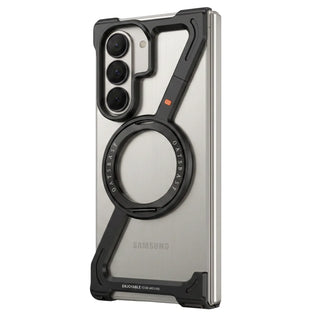
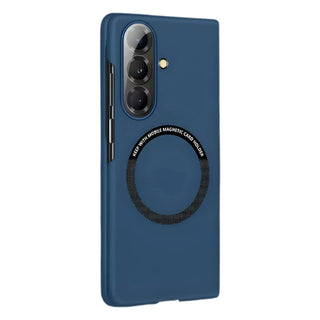
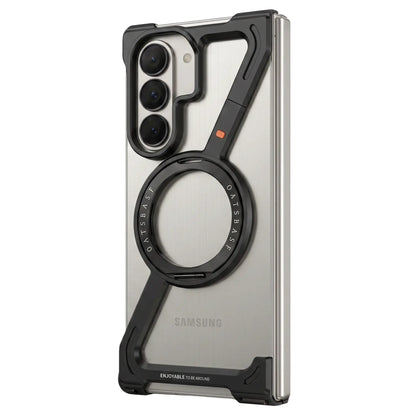
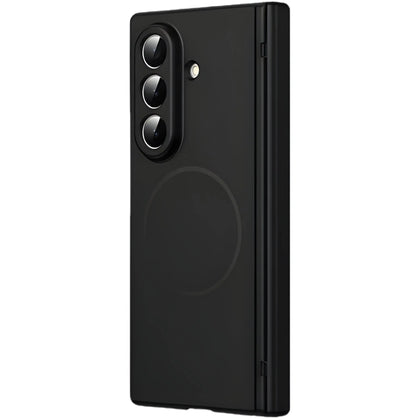
Short answer: yes, a Z Fold 7 metal case is a good choice, as long as it's built for a foldable. Metal gives you more rigidity, a premium feel and a finish that won't yellow, but it absorbs less impact than a soft TPU layer and adds weight. The good ones leave the hinge free or cover it with a flexing piece, keep metal clear of the charging coil and antenna lines, and add a soft inner lining. Ours is the aluminium Halo M1.
Up front: We make metal cases for foldables — the Halo M1 is our aluminium Galaxy Z Fold case. So we have a horse in this race. But the answers below are technically honest, and we'll tell you where metal cases lose to plastic ones, not just where they win. Updated 29 September 2026.
"Are metal phone cases actually good?" is one of the most-searched questions about Galaxy Z Fold 7 cases right now — and most of the answers floating around were written about iPhones and slab phones, not foldables. A metal case for a Z Fold has a completely different set of engineering tradeoffs than a metal case for a Galaxy S25 Ultra, because the Z Fold has a hinge and a folding ultra-thin glass display in the middle.
Below are 14 honest answers to the questions we actually get asked about metal Galaxy Z Fold 7 cases. No product card up top, no comparison table, no "best of" list — just the technical reality, in plain language. If you'd rather have a ranked shortlist across every type of case, see our best Galaxy Z Fold 7 cases guide.
By the FoldifyCase team · Foldable-only case designers since 2022 · Updated 29 September 2026
1. Are metal phone cases good, and better than polycarbonate or TPU?
Yes for rigidity, premium feel, and long-term wear; no for impact absorption and pure weight savings. Machined aluminium and aerospace-grade alloys flex less than polycarbonate, so the case feels more solid in hand and protects the chassis from torsional stress — useful on a foldable, where the hinge already adds flex. A metal frame also won't yellow, chalk, or get sticky over years the way some polycarbonates do.
The honest tradeoff: metal is harder, which means impact energy doesn't dissipate the way it does through a flexible TPU mid-layer. The best Galaxy Z Fold 7 metal cases combine a metal exoskeleton with an internal soft-touch lining (TPU or microfibre) to get the rigidity benefit without the impact penalty. A pure metal-only case is rare and not what we'd recommend.
2. Do metal cases block wireless charging on the Galaxy Z Fold 7?
Not if they're designed correctly. The Z Fold 7 charges wirelessly through a coil on the back of the device, and any thick metal sitting directly over that coil will block the field. But virtually no modern metal phone case is a single solid sheet — they're bumper-style frames with the back panel either cut out or replaced with a transparent polycarbonate window over the charging coil.
The Halo M1, for example, supports wireless charging through the case, and its N52 magnets snap onto MagSafe-style chargers and mounts. Where it goes wrong: cheap metal-look cases that use metal flake painted onto a polycarbonate shell can actually interfere worse than real metal because the flake is uneven. If the product page doesn't say wireless charging works through the case, assume the design wasn't engineered for it.
3. Do metal cases interfere with cellular signal or 5G on a foldable?
No, when the antenna lines on the chassis are left exposed. Phones with metal frames carry their cellular antennas along breaks in the frame. A case that covers those gaps with continuous metal would attenuate signal. A case that respects them (matches the cutout pattern of the original chassis or uses a non-metallic edge over the antenna line) doesn't.
This is one of those tests that's actually easy to do yourself: put the case on, walk to a marginal-signal area, watch the bars. If they drop versus the bare phone, the case is interfering.
4. Do metal cases interfere with NFC or Samsung Pay?
Same answer as wireless charging: not if the NFC zone is left clear. The NFC antenna sits under the back of the phone, and any well-designed metal case keeps metal away from it. If you're getting intermittent Samsung Pay reads, the issue is often the terminal angle rather than the case — NFC has a narrow read field, and a metal case can mean holding the phone slightly closer to the reader than you would bare.

5. How much heavier is a metal Galaxy Z Fold 7 case than a regular one?
It depends on how much metal the design uses — and we'd rather not quote figures we haven't weighed. For reference, the Z Fold 7 itself weighs 215 g. Aluminium is more than twice as dense as polycarbonate, so a metal case with the same coverage as a plastic one will weigh more; an open bumper-style frame keeps that down, while a full metal back or a multi-layer rugged build pushes it up. So a metal case takes the device from "light" to "noticeably present" in the pocket, but a bumper-style design doesn't approach the weight of a true rugged armoured case.
Whether this matters depends entirely on how you carry the phone. In a jacket pocket, you won't notice it. In a slim shirt pocket, you might. As a Z Fold owner, you're already carrying a heavier-than-average phone — a metal case is incremental, not transformative.
6. Will a metal phone case scratch my MacBook or other surfaces?
Bare anodised aluminium can, marginally, against soft anodised aluminium surfaces — like a MacBook lid. It's mostly an aesthetic issue, not a structural one. Quality metal cases mitigate this with a soft inner lining (the part touching your phone) and a textured or coated outer surface that's less likely to leave marks.
If you stack your Z Fold on top of your MacBook every day, look for a case with a flock-lined back panel or a matte powder-coated finish rather than polished aluminium. The polished finish looks great but is most likely to leave faint witness marks on similarly polished surfaces over time.
7. Are metal cases better for drop protection than plastic cases?
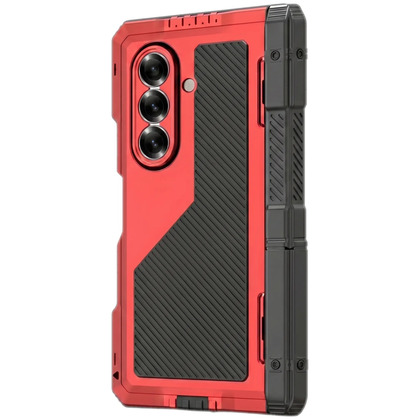
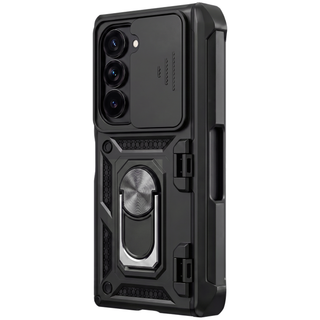
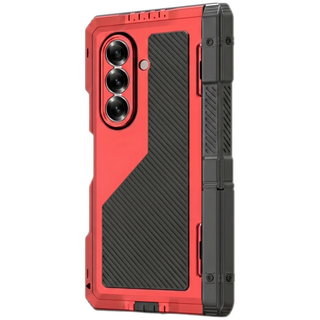
For the Z Fold 7 specifically, not on their own. A pure metal case has no give — it transfers impact energy straight to the chassis instead of absorbing it. What works best on foldables is either a hybrid — metal exoskeleton for rigidity and abrasion resistance, plus a soft internal layer to absorb shock — or a purpose-built rugged case. Our own rugged pick, the Vanguard H1, isn't metal at all: it uses a multi-layer high-impact polycarbonate construction that absorbs and dissipates energy on impact, with reinforced corners, raised edges and 360° hinge coverage.
So if drop protection is your only goal, a purpose-built rugged case with shock-absorbing layers and reinforced corners is a better bet than a single-layer metal case. If you want premium feel plus drop protection, a metal-exoskeleton + soft-interior hybrid is the right architecture.

If drop protection comes first
Vanguard H1
Multi-layer high-impact polycarbonate · reinforced corners and raised edges · 360° hinge coverage · built-in kickstand · fits Galaxy Z Fold 8 Ultra, 7, 6 & 5
View Vanguard H1 →8. Do metal cases make the Galaxy Z Fold 7 run hotter?
Not in any way you'd notice. Metal conducts heat far better than TPU or polycarbonate, so a metal case tends to spread heat away from the chassis during heavy multitasking, gaming, or wireless charging rather than trap it. The case itself gets warmer to the touch (which feels alarming the first time) — that's heat leaving the phone, not building up inside it.
Practical impact: negligible. We mention this only because the "metal cases overheat phones" worry comes up constantly, and the physics points the other way.
9. What metal alloy is used in good Galaxy Z Fold 7 cases, and why does it matter?
The best Z Fold metal cases use 6000-series or 7000-series aluminium alloys, machined or extruded — the same families of alloys used in many phone frames. The relevant difference between alloys is hardness vs weight vs anodisation quality:
- 6063 aluminium: soft, light, takes anodising well — common in lower-tier metal cases
- 6061 / 6082 aluminium: harder, slightly heavier, more dent-resistant — used in higher-tier metal cases
- 7075 aerospace-grade aluminium: hardest, most expensive to machine, used in premium designs
Watch out for cases marketed as "metal" that are actually zinc-alloy die-cast (much heavier, easier to chip), or polycarbonate with metal flake (not real metal). A good product page says what the case is made of. If it's vague, ask before buying.

10. How do metal cases handle the Galaxy Z Fold 7's hinge?
This is where the engineering gets foldable-specific and most generic metal cases fall apart. The Z Fold 7's hinge spine can't be wrapped rigidly — a continuous metal strip across the fold line would either prevent the phone from closing or stress the hinge mechanism over thousands of cycles. The answer is one of two designs:
- Two-piece metal frame with hinge cutout: the case is in two halves (one per phone half) with the hinge area entirely exposed. Simplest and safest.
- Articulated metal hinge cover: a segmented metal piece that flexes through the entire fold range without snagging. More complex, more protection.
If covering the hinge matters more to you than metal, our hinge-cover cases do it in polycarbonate instead — the Spineguard P1 uses a spring-loaded spine cover that slides as you fold, and the Vanguard H1 adds 360° hinge coverage to its rugged build. Anything else — especially metal cases marketed for the Z Fold that have a single rigid back piece spanning the hinge — risks stressing the hinge or stopping the phone from closing properly. Walk away from those.
11. Are metal phone cases worth the extra cost?
For the right buyer, yes. Metal cases usually cost more than polycarbonate ones. The premium gets you better long-term finish durability (no yellowing or chalking), better rigidity feel, and a more premium aesthetic. It doesn't get you better impact protection on its own, and it doesn't get you specialty features (magnetic ring, kickstand, hinge protection) unless those are explicitly designed in.
If you upgrade phones every 1–2 years and treat the case as semi-disposable, a polycarbonate case is the rational choice. If you keep your case longer or you value how it feels in hand on a phone this expensive, the metal premium is reasonable.
12. Will a metal case affect my Samsung Care+ warranty?
No. A third-party case of any material doesn't void Samsung's hardware warranty or Samsung Care+. The only case-related warranty issue we've seen is when a poorly-designed case (regardless of material) physically damages the phone — e.g., a too-tight cutout that puts continuous pressure on a button, or a case that doesn't allow the phone to close properly. Damage caused by an incompatible case isn't covered, but that's a fit issue, not a material issue.
13. How long does a metal case last compared to a plastic one?
Properly anodised aluminium generally holds its finish longer than polycarbonate. A polycarbonate case can start to show wear — chalking, yellowing, a softening finish — after long stretches of daily carry, while a good anodised finish shrugs off everyday abrasion. The dent risk is higher — metal can chip or dent from a sharp impact — but daily abrasion wear is minimal.
The component most likely to fail on a metal case isn't the metal itself; it's the buttons (which are usually rubber/silicone covers behind the metal frame) or the internal lining. Both are typically the limiting factor on case lifespan.
14. Should I buy a metal case for my Galaxy Z Fold 7?
Yes, if any of these describe you: you keep cases longer than a year, you value premium hand-feel on an expensive phone, you've had polycarbonate cases yellow or chalk on you in the past, or you want the case to outlast the phone for resale.
No, if any of these describe you: you change cases every few months, you work in environments where the case will take regular hard impacts (a rugged case is better there), you're trying to keep weight to an absolute minimum, or your budget only stretches to a metal-look case that's actually painted polycarbonate — in which case, just buy honest polycarbonate.
For most Z Fold 7 owners reading this, the answer is somewhere between "yes if budget allows" and "yes, eventually." Metal isn't a magic upgrade, but it's a defensible one on a phone in this price bracket.
Are Z Fold 7 metal cases good? The honest summary
Metal Galaxy Z Fold 7 cases are genuinely good when the design respects what a foldable needs — hinge cutouts, charging-coil clearance, antenna gaps, and an internal soft layer for impact. They're a poor choice when the case is a generic slab-phone metal design adapted for a foldable without addressing those requirements. The difference between a great metal case and a bad one isn't the metal; it's whether the engineer designing it thought about a hinge.
If you want to see what a foldable-specific metal case looks like, our Halo M1 is the one we'd point you to first — an aluminium build, N52 magnets for MagSafe-style chargers and mounts, and an alloy ring that rotates 360° and opens to 120° as a grip and kickstand. The Vanguard H1 is the multi-layer polycarbonate rugged option if drop protection matters more than metal or a slim profile. You'll find both, plus every other case we make for the phone, in our Galaxy Z Fold 7 cases collection.
On a Galaxy Z Fold 8 Ultra? Its folded body is the same size as the Z Fold 7 (158.4 × 72.8 × 8.9 mm), but the Halo M1 isn't listed for it — the Vanguard H1 is, and you'll find the rest in our Galaxy Z Fold 8 Ultra cases.
Related Galaxy Z Fold guides
- Best Galaxy Z Fold 7 cases (2026) — our ranked picks across every case type.
- Best Galaxy Z Fold 7 magnetic cases (2026) — deep dive on magnetic case design, including the Halo M1.
- Best Galaxy Z Fold 7 hinge cover cases (2026) — the hinge-cover designs, from slim spine covers to rugged multi-layer builds.
- Foldable specialist vs generalist case brands (2026) — the bigger question of who's actually engineering for foldables.
- Halo M1 vs Sentinel H1 — slim aluminium or a hinge-cover case, side by side.

Our top pick · Galaxy Z Fold 7
Halo M1
$47.99
Shop the Halo M1 →Browse all 12 Galaxy Z Fold 7 casesCases engineered
for the fold.
12 foldable-specialist designs — magnetic, hinge-cover, slim & S-Pen — each moulded to your exact model, not adapted from a slab-phone case.
Shop all 12 cases