


Foldable Card Holder Phone Case Guide
Choosing the right phone case with card holder for your foldable? Our guide covers designs, materials, and security for the Z Fold, Flip, and Pixel Fold.
 Editorial
Cases engineered
for the fold.
21 foldable-specialist designs — magnetic, hinge-cover, slim & S-Pen — each moulded to your exact model, not adapted from a slab-phone case.
Shop all 21 cases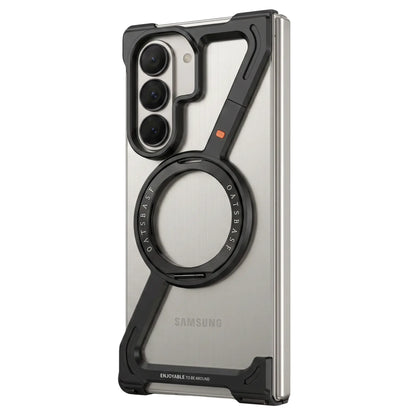
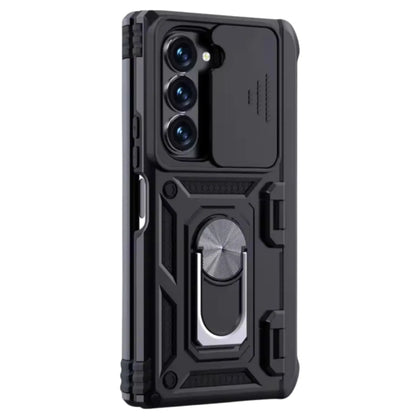
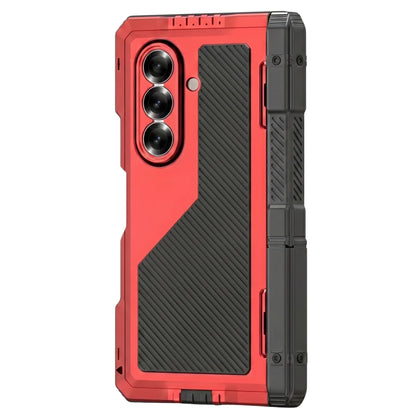
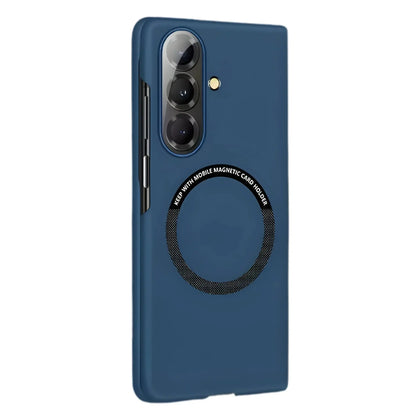
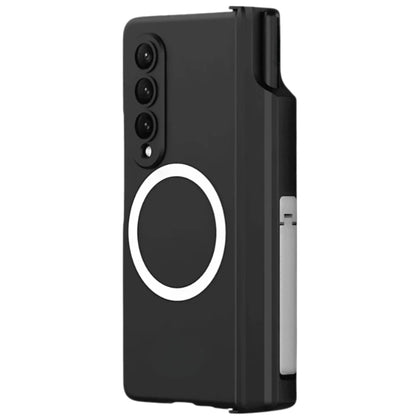
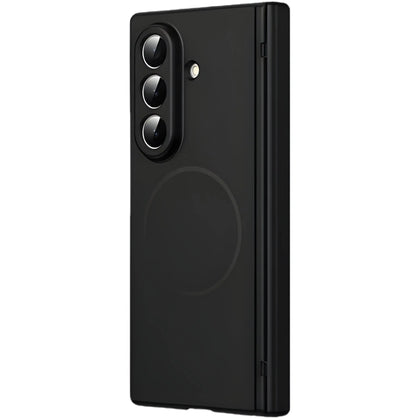
Owning a high-end foldable phone is a serious investment in new technology, so it deserves more than just a basic, off-the-shelf case. Finding the right phone case with card holder is about blending everyday convenience with the very specific protection these unique devices demand, especially around that delicate hinge.
Why Your Foldable Phone Needs a Smarter Case
Accessorizing a foldable like a Samsung Galaxy Z Fold or Google Pixel Fold is a different ball game. You're not just looking for a generic wallet case; you're looking to upgrade your device with an accessory that actually complements its advanced engineering. Think of it like getting a custom-tailored suit versus grabbing one off the rack—a specialized case is built to enhance how you use your phone, not just cover it up.
The real goal here is to merge two things you carry every day—your phone and your wallet—without making any compromises. A well-designed case thins out your pockets, protects your investment, and supports the unique folding mechanics of your device. It offers a level of integration that standard cases just can't touch.
More Than Just Protection
A great phone case with a card holder for your foldable gives you several key advantages over slapping on a generic cover:
- Integrated Convenience: Forget the bulky wallet. A good case keeps your essentials—like your ID and main credit card—attached to the one thing you never leave home without.
- Specialized Hinge Safety: Standard cases don't know what to do with a hinge, which is easily the most vulnerable part of a foldable. The best designs give you robust hinge protection that doesn't get in the way of the folding motion.
- Enhanced Functionality: Many modern cases do more than just protect. They often come with smart features like built-in kickstands or magnetic mounts, adding real utility without adding clutter.
Choosing the right case is about unlocking the full potential of your foldable phone. It turns the device from a simple communication tool into a streamlined hub for your daily life, combining productivity, payment, and protection in one clean package.
A Growing Market for Smarter Accessories
The demand for more functional and protective phone accessories isn't just a passing trend; it's a huge market shift. The mobile phone protective cover market is booming, with forecasts predicting the overall market will grow by USD 15.5 billion between 2024 and 2029. For foldable phone owners, this growth means more sophisticated and well-engineered options are hitting the market, especially in the niche of card-holder cases with dedicated hinge protection. You can see more data on this market expansion on The Business Research Company.
This guide will walk you through everything you need to know to find that perfect fit, making sure your new case is every bit as smart and versatile as the phone it's protecting.
Understanding Different Card Holder Designs
Choosing a phone case with card holder for your foldable phone isn’t like picking one for a standard slab phone. The design of the card holder itself completely changes how you use your phone every day, from the way it feels in your hand to how smoothly it opens and closes. A foldable’s unique engineering demands smarter, more creative case designs.
Not all card holder cases are built the same. Let's walk through the most common styles to get a real feel for the trade-offs of each, so you can find one that genuinely fits your life.
This map breaks down how the best cases strike a perfect balance between protection, convenience, and function for these unique phones.
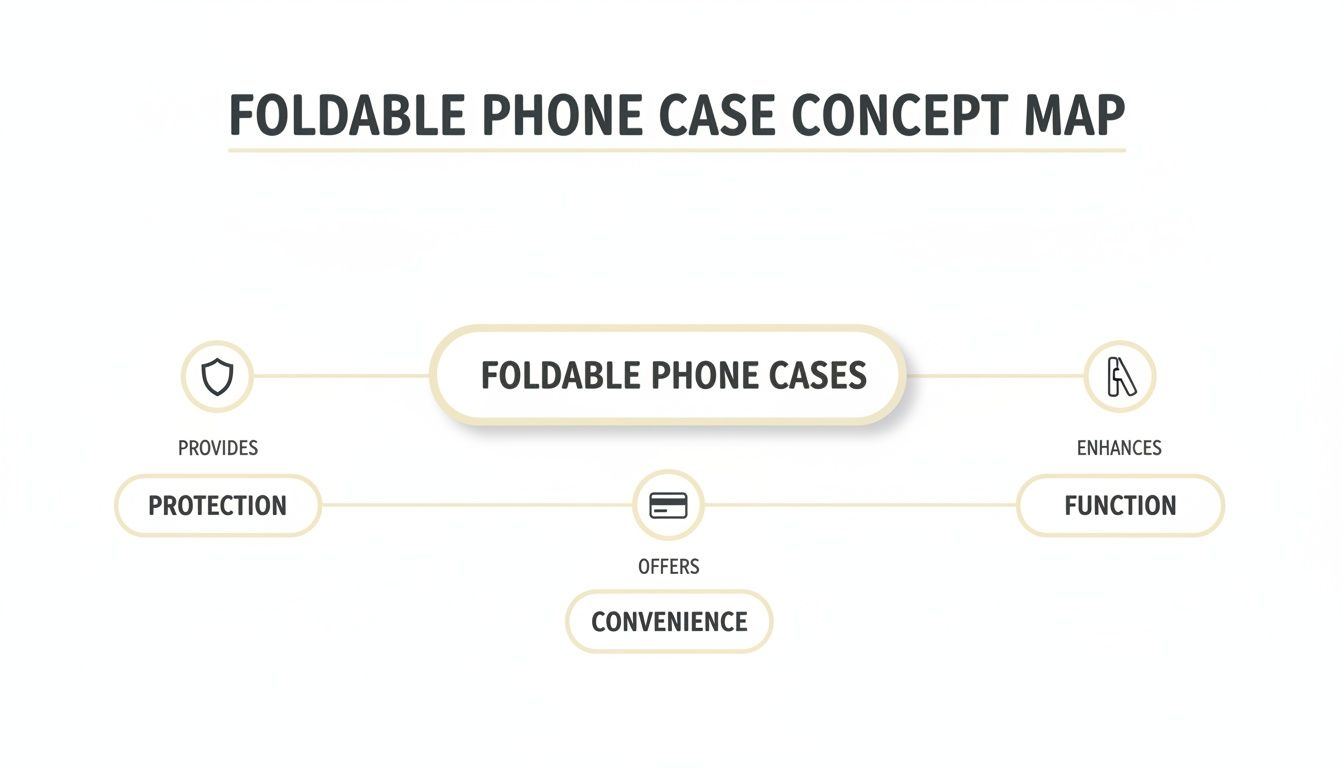
The big takeaway? A great case has to do three things well: shield the device, simplify what you carry, and support the phone's folding action without getting in the way.
To help you visualize the options, we've put together a quick comparison of the most popular designs you'll find for foldable phones.
Comparing Card Holder Case Designs for Foldable Phones
| Design Type | Card Capacity | Pros | Cons | Best For |
|---|---|---|---|---|
| Minimalist Slot | 1-2 Cards | Extremely slim, preserves phone's profile, lightweight. | Limited capacity, cards may stretch the material over time. | The minimalist who carries just an ID and one primary card. |
| Classic Folio | 3+ Cards & Cash | Excellent screen protection, high capacity, wallet replacement. | Adds significant bulk, requires opening a flap to use the phone. | The organizer who wants everything in one place and values protection. |
| Magnetic Holder | 2-4 Cards | Detachable and modular, slim when needed, versatile. | Relies on magnet strength, can be misplaced, adds thickness. | The flexible user who wants a wallet sometimes, but not always. |
| Hinge Storage | 1-2 Cards | Utilizes unused space, very secure and hidden, maintains slim width. | Limited capacity, can make the hinge feel bulkier. | The security-conscious user who values minimalism and discretion. |
Each of these styles serves a different purpose, so thinking about your daily routine is key to making the right choice. Now let's dig into the details of each one.
The Minimalist Slot Case
The most straightforward design is the integrated slot case. Think of this as the purist's choice. It features one or two slots cut right into the back of the case, giving you a sleek, unobtrusive way to carry your absolute essentials.
These cases add almost zero bulk, keeping the beautiful profile of your foldable intact. They’re perfect if you just want to carry an ID and a credit card without a second thought. Just remember, their limited space means they aren’t going to replace a full wallet.
The Classic Folio Wallet Case
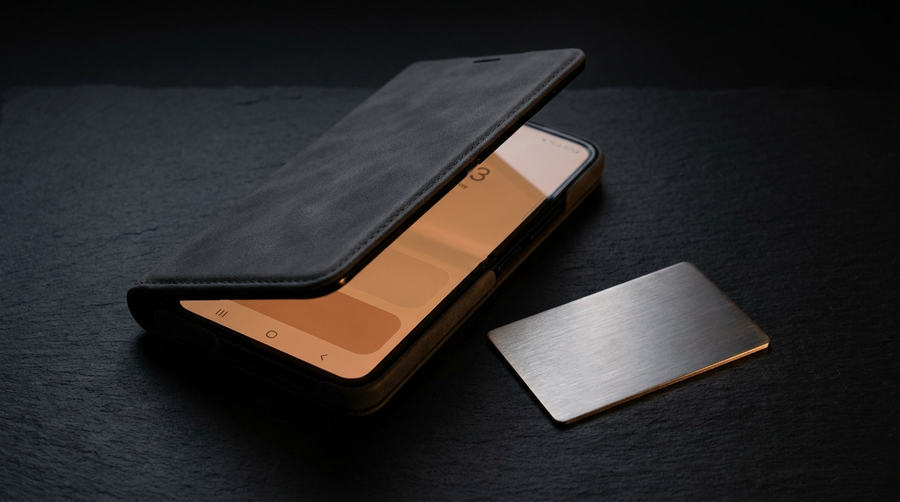
For those who need to carry a bit more, the folio or wallet-style case is a time-tested option. This design has a front cover that wraps around your screen like a book, with multiple card slots and often a cash pocket tucked inside the flap. It offers fantastic screen protection and can usually hold three or more cards.
While great for organization, the folio design definitely adds bulk. It also means you have an extra step—flipping open the cover—every time you want to use your phone's front screen. This style is ideal for people who prioritize capacity over slimness.
The Modern Magnetic Holder
A more adaptable approach is the modular magnetic holder. This system uses a standard protective case with a powerful magnetic anchor on the back, letting you snap on a separate card holder when you need it and pop it off when you don't.
This gives you the best of both worlds. You can have a slim, pocket-friendly phone for most of the day, then attach your wallet for a trip to the store. The only catch? The quality of the magnets is everything. A weak connection is a recipe for disaster.
A well-designed magnetic system should feel incredibly secure. You want a confident "snap" when it attaches and enough resistance that it requires intentional force to pull off. That's how you know your cards aren't going anywhere.
Innovative Hinge Storage Designs
Finally, we have some of the most clever designs for foldables: cases that use the hinge for storage. Since the hinge is a unique part of these phones, some cases are built with a small compartment right inside the hinge protector itself. It’s a brilliant way to add function without making the phone wider.
These designs usually hold one or two cards in a hidden, secure slot. This keeps your cards completely out of sight and protected while the phone maintains a slim profile. It’s an amazing solution for anyone who wants both security and minimalism.
If you're curious about how these integrated designs can simplify your daily carry, you might want to read our post on exploring the benefits of a card holder case for a closer look.
Key Features You Should Never Overlook
A great phone case with a card holder for your foldable phone has to do more than just carry your essentials. It needs to play nice with all your phone's advanced features without causing frustrating glitches or, even worse, damage. Think of it as a personal assistant for your phone—it should help out without getting in the way of the main job.
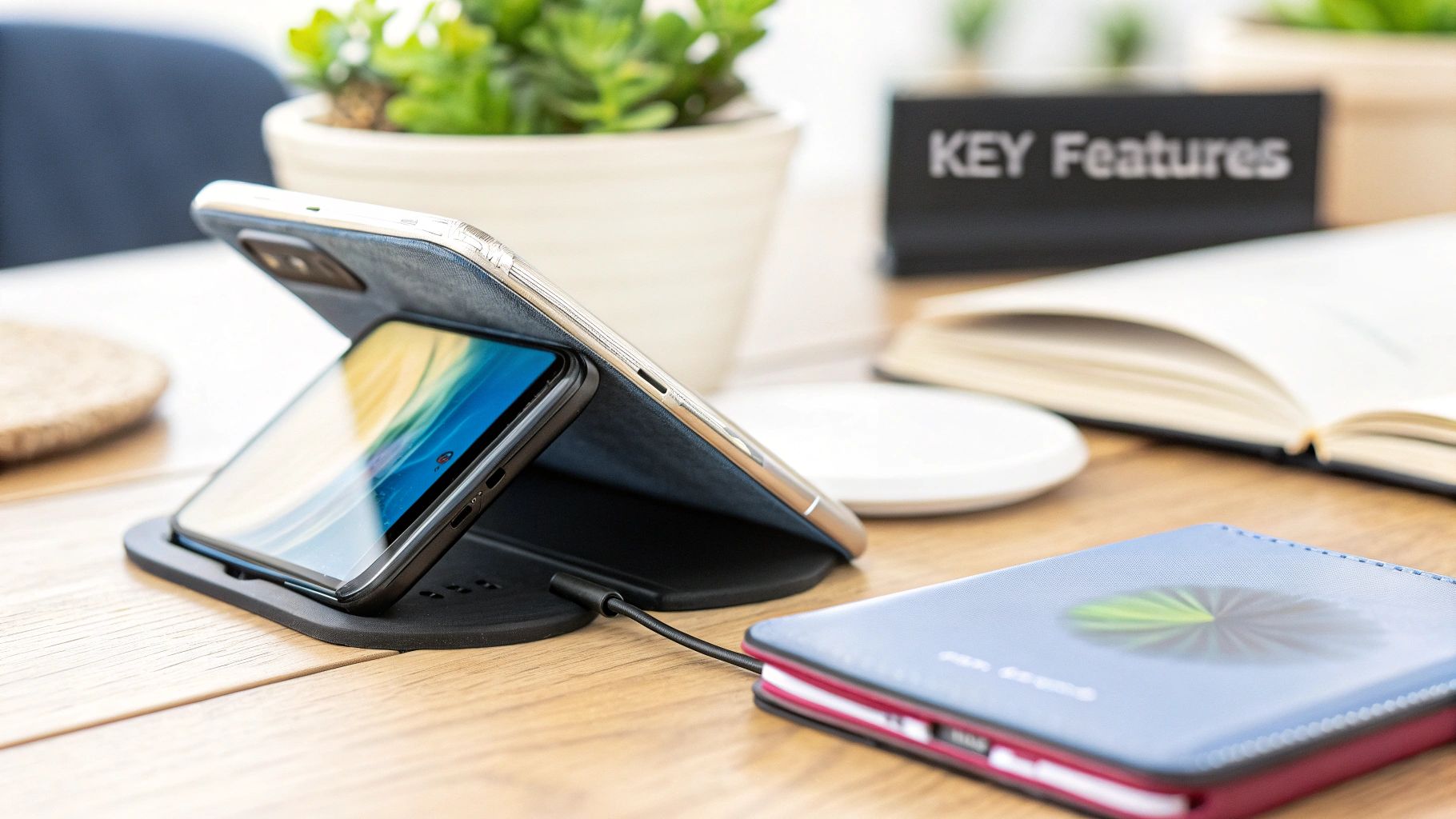
To make sure you get a flawless experience, there are three critical technical details you can't afford to ignore. These are the things that separate a well-engineered case from a cheap, poorly designed one. Let's break down exactly what to look for so you can make a smart choice.
Will It Work With My Wireless Charger?
Wireless charging is a standard convenience we all expect now, but a badly designed card holder case can kill it. The charging coil in your phone needs to get as close as possible to the charging pad, and any extra material between them can weaken or block the connection completely.
It’s like trying to have a conversation through a thick wall—the message gets muffled or just doesn't get through. A thick case, especially one with metal parts or stuffed with multiple cards, creates a barrier that stops the charging signal cold. This is why the material and overall design are so important.
Here’s a quick checklist for wireless charging compatibility:
- Material Matters: Look for cases made from non-interfering materials like polycarbonate, TPU, or thin leather. Steer clear of cases with metal plates unless they're specifically for magnetic mounting and positioned away from the charging coil.
- Card Placement is Key: The best designs put the card slots away from the phone's central charging area. Some folio-style cases or modular magnetic wallets even let you detach the card section before charging.
- Thickness and Design: A slim profile is always better. Bulky cases with too many layers can create too much distance for the wireless charger to do its job.
Are Magnets Safe for My Phone?
Lots of modern cases use magnets for closures, kickstands, or modular attachments. While they're incredibly handy, strong magnets in the wrong spot can cause real problems for foldable phones, especially those with stylus support like the Samsung Galaxy Z Fold.
The S Pen, for instance, uses a sensitive digitizer layer under the screen to work. A powerful, poorly placed magnet can create a "dead spot," temporarily messing up the S Pen's accuracy in that area. It can also interfere with your phone's internal compass and other sensors.
A well-designed magnetic case strategically places its magnets to avoid sensitive areas like the S Pen digitizer and charging coil. The goal is functionality without compromise, ensuring every feature of your phone works as intended.
To avoid headaches, choose a case from a brand that specifically designs for your foldable model. These manufacturers know the internal layout of the device and put magnets where they won't cause any trouble. This kind of thoughtful engineering is what you're paying for in a premium product.
Does It Actually Protect the Hinge?
Finally, and most importantly, the number one job of any case for a foldable phone is protection. The hinge is its most vulnerable part. The card holder feature should be a bonus, never a trade-off that compromises the safety of this critical mechanism.
Think of the hinge as the spine of your device. A good case acts like armor for that spine, absorbing impacts and keeping out dust and debris. Some card holder designs, especially bulky or poorly fitted ones, can leave the hinge exposed or even get in the way of its movement.
When looking at a phone case with card holder, ask yourself these questions about hinge protection:
- Does it offer full coverage? The best designs provide complete protection for the hinge, whether the phone is open or closed.
- Is the movement smooth? The case shouldn't add friction or make it harder to open and close your phone.
- Is it built for impact? Look for durable materials and a design that can take a hit right on the hinge area.
A case that fails to protect the hinge is failing at its most fundamental job. Always make robust hinge security a top priority when you're making your final decision.
Choosing Materials for Durability and Style
The material of your phone case with card holder is so much more than a style choice—it gives the case its entire personality. It dictates how it feels in your hand, how it wears over time, and most importantly, how well it guards your foldable phone against the chaos of daily life. Picking the right material is like choosing the right tool for a job; it has to fit your lifestyle perfectly.
For a foldable, this decision carries even more weight. The materials have to be flexible enough to move with the phone’s unique mechanics but tough enough to shield its most fragile parts, like the all-important hinge. Let's break down the most popular options to see how they stack up.
The Classic Appeal of Leather
Leather, whether it's genuine or vegan, has a timeless look that just screams professionalism and class. It’s the go-to choice for anyone who wants their tech accessories to feel as premium as the device they’re protecting.
- Genuine Leather: This material is loved for its durability and the unique patina it develops as it ages. No two genuine leather cases will look the same after a few months, giving your phone a character that’s all its own. It’s soft to the touch, offers a fantastic grip, and provides a decent amount of shock absorption.
- Vegan Leather (PU Leather): A high-quality alternative that delivers a similar sophisticated vibe without using animal products. It’s often more resistant to moisture and way easier to clean, making it a super practical choice for everyday use. Plus, you'll find it in a much wider range of colors and finishes.
Whether you go for genuine or vegan, a leather case is a perfect partner for a professional setting. For more tips on keeping it looking sharp, check out our guide on caring for your leather phone case for Samsung devices.
Modern Protection with Synthetics
When you need maximum, no-nonsense durability, synthetic materials like polycarbonate and TPU are the champions. These are the real workhorses of the case world, engineered from the ground up to absorb impacts and shrug off damage. You’ll often find them working together in hybrid designs to get the best of both worlds.
Polycarbonate (PC) is a rigid, tough-as-nails plastic. Think of it as the case's skeleton, providing a hard outer shell that deflects scratches and direct hits. It’s incredibly strong yet lightweight, so it's ideal for protecting the main body of your foldable without adding a ton of bulk.
Thermoplastic Polyurethane (TPU), on the other hand, is the shock absorber. It’s a soft, flexible, rubber-like material that’s brilliant at soaking up the energy from a drop. You’ll often find TPU on the corners and edges of a case—the spots that are most likely to hit the ground first.
A hybrid case that blends a hard PC back with a flexible TPU bumper offers a seriously balanced defense. The PC shell fights off punctures and scrapes, while the TPU frame cushions your device against drops, giving you protection from every angle.
This combo is especially great for people in demanding jobs. In fact, device protection and personalization are huge drivers in the phone case market, with a big focus on balancing rugged function with style. For professionals in construction or field services, card-holder cases with military-grade protection offer a powerful two-for-one solution: hardcore durability plus the convenience of carrying essential cards without extra gear. You can read more about these market trends over at Business Research Insights. Choosing a case built from these materials ensures your foldable is ready for anything.
How to Keep Your Cards Safe and Secure
Let's be honest, merging your wallet with your phone brings up a big question: is everything actually safe? It’s a fair concern. But a well-designed phone case with a card holder can be just as secure as your old leather wallet—and sometimes, even more so. The secret is knowing what to look for in both digital and physical security.
First up, the invisible threat: digital skimming. Most of our credit and debit cards now use Radio-Frequency Identification (RFID) for those convenient tap-to-pay transactions. Think of it as a tiny antenna inside your card that sends out your payment info when you get close to a reader. Super handy, but it also opens a small window for thieves with special readers to try and snatch that data from a distance.
The Power of RFID Blocking
This is exactly why RFID-blocking phone cases are a game-changer. They act like a digital forcefield for your cards. The case is lined with a special material that scrambles the radio waves that skimmers use, making it impossible for them to get a clean read on your card info.
It’s like trying to eavesdrop on a whisper in the middle of a rock concert—the blocking material creates so much noise and interference that the skimmer's device can't pick up a thing. This simple tech is your best defense against digital pickpockets. With data compromises on payment cards becoming alarmingly common, this kind of protection isn't just a feature; it's peace of mind.
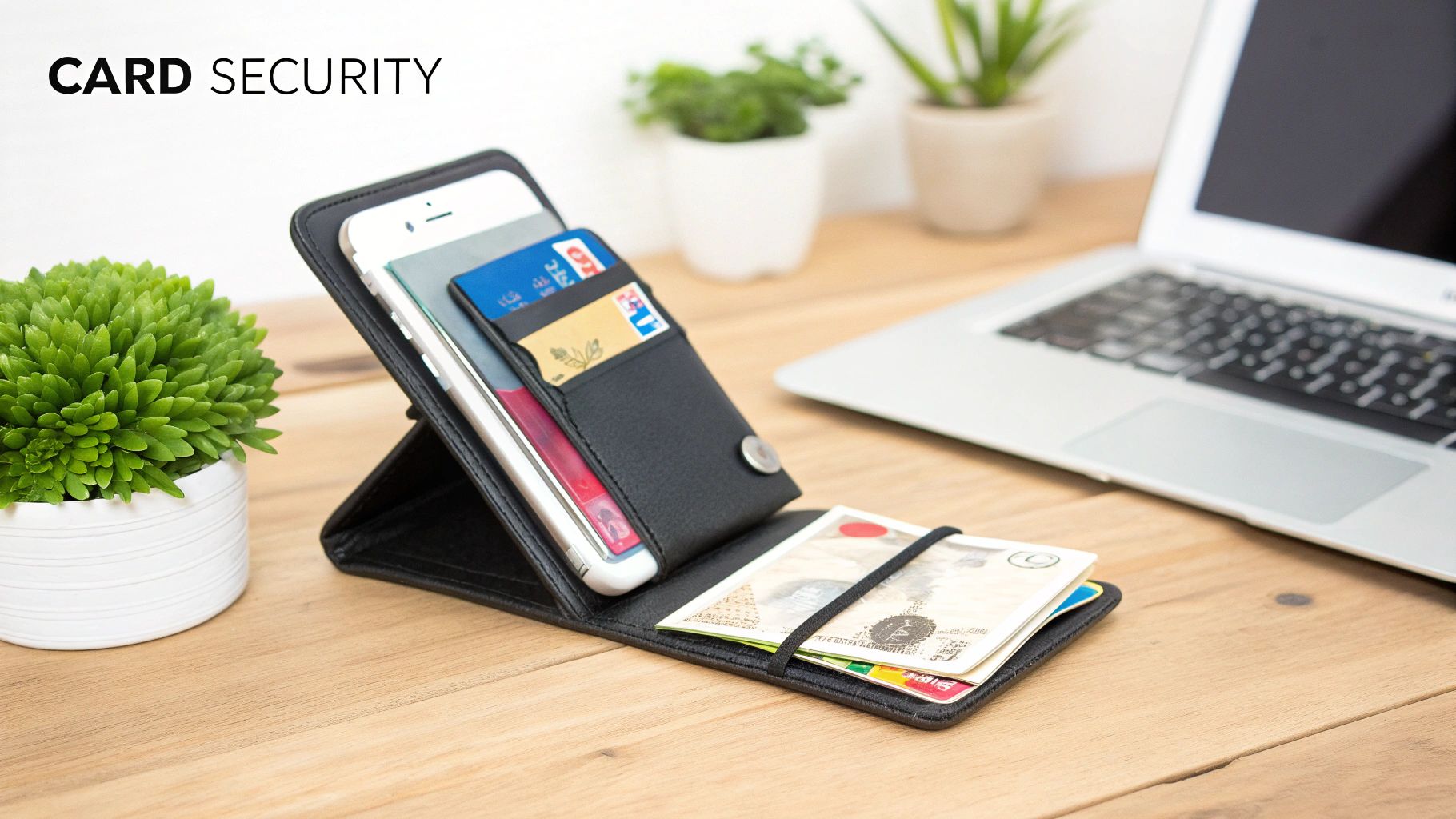
Smart Designs for Physical Security
Digital security is only half the battle. You also need to know your cards are physically locked down. A high-quality phone case with a card holder is built to grip your cards tightly, stopping them from slipping out when you’re pulling your phone from a pocket or bag. Gravity is not your friend here, so good design is critical.
Here are the key physical security features to look for:
- Snug-Fitting Slots: The card slots shouldn't be loose. They need to be cut precisely to create a tight fit based on friction. When a card slides in, it should feel secure. Poorly made slots will stretch out over time, and that's when cards start to go missing.
- Secure Closure Mechanisms: If you’re looking at a folio or flap-style case, the closure has to be solid. Look for strong magnetic clasps, sturdy snaps, or a tough elastic band that keeps the wallet part shut, even if you drop your phone.
- Raised Edges: This is a subtle but brilliant feature. A slightly raised lip around the card slots adds an extra bit of friction, making it that much harder for a card to slide out on its own.
A great card holder case is all about intentional design. Every element, from the tension of the card slots to the strength of the magnetic clasp, is deliberately engineered to keep your essentials exactly where they belong.
When you pick a case with these features, you can confidently leave your old, bulky wallet behind. You get the best of both worlds: tough physical design and modern digital protection, all wrapped into one sleek accessory for your foldable phone. It’s that thoughtful engineering that turns a simple convenience into real security.
Your Final Checklist for Choosing the Perfect Case
Alright, feeling ready to finally pick out that perfect phone case with card holder? Let's tie everything we've talked about into a simple, straightforward checklist. Going through these questions before you click "buy" will make sure you land a case that turns your foldable phone into the ultimate everyday tool.
It’s no surprise that accessories combining protection and convenience are exploding in popularity. The global phone case market was valued at a staggering USD 24.47 billion in 2023 and is on track to hit USD 25.72 billion in 2024. That's a lot of people wanting more from their cases. You can dig deeper into the growth of the phone case market on skyquestt.com if you're curious. This checklist will help you cut through the noise and find exactly what you need.
Device Fit and Core Protection
First things first: the case has to be made specifically for your foldable model, whether it’s a Galaxy Z Fold, Z Flip, or Pixel Fold. A perfect fit isn't a "nice-to-have"—it's the absolute foundation for protection and function.
- Is it model-specific? The case needs precise cutouts for every port, button, and camera. Nothing should be blocked or hard to access.
- How good is the hinge protection? This is the most critical part. Does the case offer solid, full-coverage hinge protection that moves smoothly? A card slot is never worth sacrificing the safety of your phone's most complex part.
- What's the drop protection like? Look for terms like "military-grade" or materials like shock-absorbing TPU if you need serious durability.
Capacity and Lifestyle Compatibility
Next, be honest with yourself about how you'll actually use the card holder. Your daily grind is the best indicator of which design and material will work for you.
Your phone case is a daily companion. It should complement your lifestyle, not complicate it. Choose a material and capacity that aligns with your professional needs, daily activities, and personal style.
Ask yourself these lifestyle questions:
- How many cards do you really need to carry? If it’s just your ID and a credit card, a simple slot is perfect. If you need more, a folio or a detachable wallet makes way more sense.
- What does your typical day look like? An office professional might love a sleek leather case, but if you're working in a more rugged environment, the toughness of polycarbonate is a much smarter choice.
- How important is a slim profile? If you can't stand a bulky pocket, stick with a minimalist slot or a clever hinge storage design. If carrying capacity is your top priority, you'll have to be okay with the extra thickness of a folio.
Tech and Security Features
Finally, make sure the case plays nice with all your phone's advanced features. This is where you can really tell if a case was thoughtfully engineered or just rushed to market. To get a clear idea of how a case looks and functions, always check for high-quality electronics product photos, as they're essential for showing off the details that matter.
- Is it wireless charging friendly? Always double-check the product description. Thinner cases without any metal parts are your safest bet here.
- Are magnets placed safely? If the case uses magnets, they need to be positioned well away from the S Pen digitizer and the wireless charging coil to prevent any interference.
- Does it offer RFID blocking? For real peace of mind against digital theft, an RFID-blocking layer is a must-have feature to protect your cards from skimming.
By running through this checklist, you can confidently size up any phone case with card holder and pick the one that truly fits your needs. For some great real-world examples, take a look at our roundup of the top card holder cases for the Galaxy series.
Frequently Asked Questions
You've got questions about pairing a phone case with a card holder with a unique device like a foldable, and we have the answers. Let's tackle the most common concerns head-on so you can feel completely confident in your final choice.
Will a Card Holder Case Make My Foldable Too Bulky?
This is the number one concern, and it’s a fair one. The short answer is: it depends entirely on the design you pick.
A minimalist case with one or two integrated slots will add almost no noticeable thickness, keeping the sleek profile of your foldable phone intact. However, a folio-style case built to hold 3-4 cards plus cash will definitely feel more substantial. The key is to be honest about what you need. If you're aiming to ditch your entire wallet, expect a thicker case. If you just need your ID and a primary credit card, a slimline design is the way to go.
How Many Cards Can These Cases Realistically Hold?
Card capacity varies quite a bit between designs. It's really important to stick to the manufacturer's recommendation to avoid stretching the material and, worse, having your cards fall out.
- Minimalist Slot Cases: These are designed for 1 to 2 cards. Trying to cram more in will cause the material to lose its grip over time.
- Folio or Wallet Cases: Built for more capacity, these often hold 3 or more cards and usually have a small pocket for cash.
- Modular Magnetic Wallets: These typically hold 2 to 4 cards and have the huge advantage of being detachable for when you want a slimmer profile.
Think of it like a specialized tool. Using your card holder case as intended—without exceeding its limit—ensures it works perfectly for years. Overloading it is the fastest way to wear it out.
Will the Cards Damage My Phone’s Screen When Folded?
That's a smart question, especially with "book-style" folio cases where cards rest against the screen. In a well-designed case, this isn't an issue.
High-quality folio cases include a soft microfiber lining that acts as a buffer, protecting the screen from scratches. The card slots themselves are also slightly recessed, meaning the cards don't make direct, hard contact with the glass. Still, if you're worried about your delicate inner screen, it's a good idea to avoid cards with heavily embossed (raised) numbers, as they can create pressure points.
Do I Still Need a Separate Screen Protector?
Yes, absolutely. While a folio case does a great job protecting the front screen when it’s closed, a phone case with a card holder is no substitute for a dedicated screen protector. Your screen is still completely exposed whenever you're actually using the phone.
For a foldable, you really need protection for both the outer and inner screens. Combining a quality case with a durable screen protector gives you true 360-degree protection, safeguarding your investment from every angle. It's the best way to keep your device looking brand new.
Ready to find the perfect blend of convenience and protection for your foldable phone? The experts at FoldifyCase have engineered a premium collection of card holder cases designed specifically for your device's unique needs. Explore the collection at FoldifyCase and upgrade your daily carry today.
Shop FoldifyCase foldable phone cases
Precision cases for Galaxy Z Fold & Z Flip — full MagSafe, S-Pen ready, zero bulk.