Best Wireless Charging Stations 2026
Cut the cord for good. Discover the best wireless charging stations of 2026 and learn how to choose the perfect one for your phone, watch, and earbuds.
Editorial
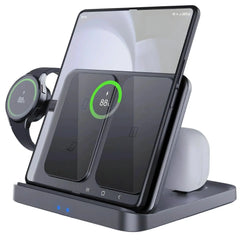
If you’ve ever hunted for the best wireless charging station, you probably realized one thing pretty quickly: the best ones are all about speed, convenience, and powering everything at once. The top contenders are usually 3-in-1 stations that can juice up your phone, watch, and earbuds simultaneously, often with magnets that snap everything perfectly into place.
Why Wireless Charging Is No Longer a Luxury

Let's be honest, staring at a tangled mess of cables feels ancient. Wireless charging has made the jump from a cool novelty to an essential part of our daily lives. Think of it like swapping your old flip phone for a smartphone—the leap in convenience is just that big.
The reason this tech is taking over is simple: it solves the universal problem of cord clutter and makes life easier. No more fumbling for a cable in the dark. You just drop your phone on a pad and go. But the benefits go way beyond just a tidy nightstand.
Preserving Your Device and Investment
One of the biggest unsung benefits of going wireless is saving your phone's charging port from wear and tear. That daily ritual of plugging and unplugging creates stress on a tiny, delicate connector. Over time, this can lead to expensive repairs or, even worse, a dead port.
By cutting out that repetitive action, you're massively extending the life of one of your phone’s most fragile parts. For anyone with a premium phone, this isn't just about convenience—it's a smart move to protect your investment.
This is even more critical if you own a cutting-edge device like a Samsung Galaxy Z Fold or Pixel Fold. The complex engineering in these phones means keeping the charging port in perfect condition is non-negotiable. A great wireless charging station is practically a requirement for keeping these advanced devices running for the long haul.
A Market Driven by Demand
The massive shift to wireless isn't just a fleeting trend; it’s a seismic change in the market. The global wireless charging market is set to explode, projected to grow from USD 45.92 billion in 2026 to an incredible USD 237.03 billion by 2034. This growth is being driven by our ever-increasing appetite for electronics that need seamless, cable-free power. You can see the full breakdown of this market surge on fortunebusinessinsights.com.
It’s also a direct response to the needs of modern users. Take professionals who use rugged cases on their foldable phones—wireless charging completely removes the risk of cable damage and can slash device port failures by up to 30%, according to industry analysis.
This guide will break down why the best wireless charging stations have become the new standard. We’ll cover:
- How wireless charging actually works, in simple terms
- The key features you absolutely need to look for
- Special things to keep in mind for foldable phone owners
- How to pick the perfect station for your specific needs
How Your Devices Charge Without Wires
Ever just drop your phone on a pad and watch it start charging? It feels a little like magic, but the science behind it is surprisingly simple and has been around since the 1800s. The entire process hinges on a principle called electromagnetic induction.
Think of it like this: if you strike a tuning fork, another one across the room might start vibrating on its own, all without touching. Wireless charging uses a similar idea, but instead of sound, it sends energy through an invisible magnetic field. This is the secret to how the best charging stations power up your gear so effortlessly.
The Invisible Energy Handshake
Every wireless charging setup relies on two key parts working together: a transmitter and a receiver.
- The Transmitter Coil: This copper coil lives inside your charging station. When you plug the station in, electricity runs through the coil and creates a small, controlled magnetic field around the pad—like an invisible energy bubble.
- The Receiver Coil: A second, smaller coil is built right into the back of your phone, earbuds, or smartwatch. Its job is to "listen" for that magnetic field from the transmitter.
When you place your device on the charger, its receiver coil enters that magnetic field. The field immediately creates an electrical current in your phone’s coil, essentially "catching" the energy. That current is then converted to charge your battery. It's a perfect, invisible handshake that sends power right through the air.
Why Coils and Alignment Are So Important
How well this energy transfer works all comes down to how perfectly the two coils are lined up. If they're perfectly aligned, you get a strong, fast charge. But if they're even a little off-center, the connection weakens, charging slows to a crawl, and the wasted energy escapes as heat.
This is exactly why a poorly placed phone sometimes gets warm or takes forever to charge. The charger and your phone are struggling to maintain a solid link, a bit like a radio station fading in and out when the signal is weak.
The real challenge of wireless charging isn't just making power, but making sure you get a perfect connection. A small shift in your phone's position can slash charging efficiency by over 50%, turning a fast charger into a slow one.
This is where modern features like magnetic alignment (MagSafe and Qi2) and stations with multiple overlapping coils become so important. They were designed specifically to solve this alignment problem, guaranteeing that perfect "handshake" between your device and the charger every single time.
For a deeper dive into the mechanics of this technology, you can learn more about how wireless charging works in our detailed guide.
From a Simple Pad to a Smart Hub
Today’s best wireless charging stations are much more than just a simple transmitter. They are sophisticated hubs that intelligently manage how power is delivered to your devices. They know when your phone is fully charged and will automatically cut power or switch to a low-energy trickle charge.
This smart management prevents overcharging, which protects your battery’s long-term health and keeps everything safe. It’s all built on that simple foundation of electromagnetic induction, but with an added layer of intelligence that makes wireless charging a truly practical part of modern life.
What to Look for in a Wireless Charger
Not all wireless chargers are created equal. Walking into the world of wireless charging can feel like learning a new language, with terms like watts, coils, and Qi floating around. This guide will help you decode the specs and find the perfect charging station, making sure you don’t end up with a slow, frustrating coaster.
We’ll break down the most important features to look for, translating the tech jargon into real-world benefits. By the end, you’ll know exactly what separates a great wireless charger from the rest.
Power Output: The Key to Fast Charging
The single most important factor determining how fast your device powers up is its power output, measured in watts (W). Think of watts like the pressure in a water hose; higher wattage means more power flows to your device, filling its battery much faster.
A standard, basic charger might only offer 5W. That's fine for overnight charging but will feel painfully slow if you need a quick boost before heading out. A more powerful 15W charger, on the other hand, can cut charging times by more than half.
A typical smartphone might take over 4 hours to charge on a 5W pad, but that time can drop to under 2 hours with a 15W charger. That's a huge difference when you're in a hurry.
It's not as simple as just buying the highest-wattage charger you can find, though. Your phone also has to be able to accept that much power. For example, iPhones can take up to 15W with a MagSafe or Qi2 charger, and many flagship Android devices also support 15W fast wireless charging.
To give you a better idea of what to expect, here’s a quick comparison of common power levels and what they mean for your daily routine.
Wireless Charging Speed and Power Comparison
| Power Output | Best For | Typical Smartphone Charge Time (0-100%) | Typical Earbuds/Watch Charge Time (0-100%) |
|---|---|---|---|
| 5W | Overnight charging, basic top-ups | 4+ hours | 2.5 - 3 hours |
| 7.5W | Standard iPhone wireless charging | 2.5 - 3.5 hours | 2 - 2.5 hours |
| 10W | Standard Samsung & Android fast charging | 2 - 3 hours | 1.5 - 2 hours |
| 15W | Max-speed fast charging (MagSafe, Qi2, Android) | 1.5 - 2 hours | 1 - 1.5 hours |
As you can see, jumping from a basic 5W charger to a modern 15W station makes a massive real-world difference, especially for your phone.

This process relies on a seamless transfer of energy from the charger's coil to your phone's coil, which brings us to the next crucial feature.
Coil Count and Alignment: The Secret to Perfect Placement
Have you ever placed your phone on a wireless charger, only to wake up and find it didn't charge at all? The culprit is almost always poor alignment between the coil in the charger and the one in your phone. This is where coil count and magnets become game-changers.
A basic, single-coil charger demands you place your phone perfectly. If you’re off by even a few millimeters, charging can slow to a crawl or just stop. That’s why many of the best wireless charging stations now use multiple, overlapping coils to create a much bigger "sweet spot," letting you drop your phone on the pad without obsessively hunting for the right position.
The ultimate solution to this problem is magnetic alignment, a feature made popular by Apple’s MagSafe and now standardized in the new Qi2 (pronounced "chee-two") certification. Magnetic chargers use a ring of magnets to automatically snap your phone into the perfect spot every single time. It's a brilliant, foolproof system that guarantees the most efficient charge.
This is what makes products like the FoldifyCase wireless charging station so reliable, especially for larger devices like foldable phones where finding that tiny charging coil can be a real headache.
Multi-Device Capabilities: Your All-in-One Power Hub
Life is complicated enough without juggling separate chargers for your phone, smartwatch, and earbuds. A 3-in-1 charging station offers an elegant solution, powering your entire daily tech loadout from a single outlet.
When you're shopping for a multi-device station, look for these key things:
- Dedicated Spots: A good station has clearly defined spots for each device, often with custom-shaped indentations or magnetic mounts. This prevents a cluttered mess.
- Sufficient Total Power: The station must have enough total wattage to charge everything at once without slowing to a crawl. If a 3-in-1 station has a low overall output, adding a second or third device will dramatically reduce charging speeds for everything.
- Watch Charger Compatibility: This is critical. Apple Watches and Samsung Galaxy Watches use different, proprietary charging technologies. A charger built for an Apple Watch will not work for a Samsung watch, and vice versa. Always double-check that the watch puck is made for your specific brand.
Safety Certifications: The Peace of Mind Factor
Plugging something into the wall that will sit next to your head all night requires a level of trust. That's where safety certifications come in. The most important one to look for is Qi certification from the Wireless Power Consortium (WPC).
Qi is the universal standard for wireless charging. A Qi-certified charger has passed tough tests for safety, efficiency, and compatibility. This certification ensures the charger has critical safety features built-in.
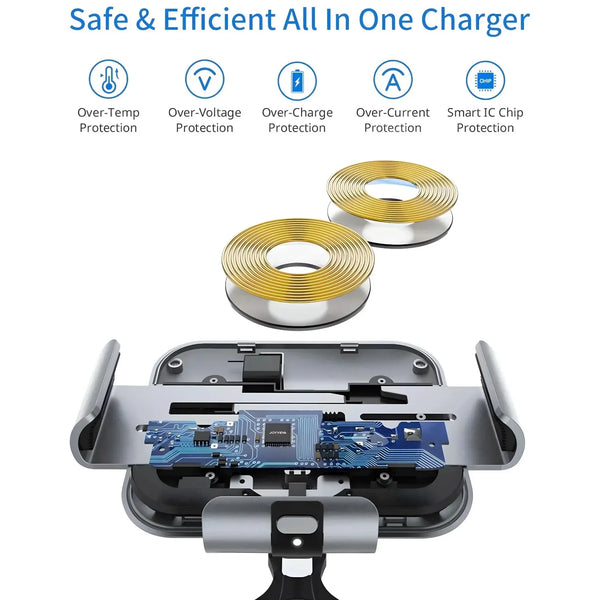
- Overheating Protection: Shuts the charger off if temperatures get too high.
- Foreign Object Detection: Stops the charger from sending power to metal objects like keys or coins, which could heat up dangerously.
- Overcharge Protection: Stops the power flow once your device's battery is full, protecting its long-term health.
Never buy an uncertified charger. The few dollars you might save simply aren't worth the risk to your expensive devices or your home. The best wireless charging stations will always display their Qi certification proudly.
Solving the Foldable Phone Charging Puzzle

There's no denying the appeal of a foldable phone like a Samsung Galaxy Z Fold or Google Pixel Fold. You get a phone that opens into a tablet—it’s the best of both worlds. But this incredible design creates a unique set of problems, and wireless charging is right at the top of the list.
The very things that make your phone special, like its hinge and large size, often get in the way of a standard charging pad. If you’ve ever set your foldable down only to come back to a dead battery, you’ve hit this wall yourself.
The Hinge and Case Conundrum
The real headache comes from two things working against you: the phone's hinge and its protective case. A foldable's hinge naturally creates a bump or an uneven surface on the back. This tiny ridge is often just enough to prevent the phone's internal charging coil from lining up perfectly with the coil in the charging station.
Even a gap of a few millimeters can kill the connection. The result is painfully slow charging, your phone getting alarmingly hot, or it not charging at all.
Now, let's add a case. No one wants to risk a $1,800+ device without one, so a durable case is non-negotiable. The problem is that many heavy-duty cases—especially those with full hinge protection—add significant bulk. This extra layer increases the distance between the coils, pushing them past the point where they can effectively connect.
The combination of a bulky case and the uneven surface from the hinge can make reliable wireless charging feel like a lost cause with generic chargers. It's more than an annoyance; it stops you from using a key feature of your phone.
This is exactly why grabbing just any "best" wireless charger off the shelf won't cut it for a foldable owner. You need a setup where the case and the charger are built to cooperate, not conflict.
Creating a Flawless Charging Ecosystem
The only way to solve this puzzle is to get rid of the interference. That requires thinking of your case and charger as a single system, where the case is engineered to be invisible to the charging signal and the station is strong enough to make a solid connection.
This is where we put our specialized knowledge to work. At FoldifyCase, we understood from the start that protecting your foldable shouldn't mean giving up its best features. Our cases are designed to offer military-grade protection without blocking wireless charging.
We pull this off by focusing on a few critical details:
- Smart Material Choices: We use advanced composites that are tough enough for serious drops but don't interfere with the electromagnetic field needed for charging. The power passes right through.
- Engineered Hinge Protection: Our hinge mechanisms are designed to lay perfectly flat when the phone is open. This creates the smooth, stable surface needed for the coils to align properly.
- Real-World System Testing: Every FoldifyCase is tested for more than just drop protection. We verify its compatibility with high-output wireless chargers to ensure it works in the real world.
When you pair a FoldifyCase with a quality wireless charger, you get a dependable charge with the case on, every time. Your phone stays safe, and charging stays simple. You can dive deeper into the science by reading our guide on how wireless charging works through a case.
Why the Right Pairing Is an Investment
For foldable owners, getting the right case and charger isn't just about convenience—it's about protecting your phone for the long haul. A reliable wireless setup saves wear and tear on your phone's physical USB-C port, which is one of the few mechanical points of failure on these advanced devices.
By choosing a system where the case and charger are confirmed to work together, you're not just buying accessories. You’re investing in a seamless experience that keeps your high-tech device protected and powered up. It’s the final piece of the foldable puzzle, turning a common frustration into an effortless part of your day.
Matching a Charging Station to Your Daily Life
There’s no such thing as the “best” wireless charging station—only the one that’s best for you. The right station is one that seamlessly disappears into your daily life, getting rid of charging headaches without creating new ones.
To find your perfect match, you first need to understand your own charging habits. Do you need a single power hub for every device you own, or just a simple, elegant pad for your nightstand? Let's break down how different lifestyles call for completely different features.
The Busy Professional
For professionals juggling a packed schedule, efficiency is non-negotiable. Your desk is your command center, and every piece of tech—your phone, smartwatch, and earbuds—has to be ready to go at a moment's notice. A desk buried in a nest of cables is a distraction you just can’t afford.
Your ideal setup is a powerful 3-in-1 charging station. It’s the ultimate decluttering tool, consolidating all your charging into one sleek unit with a single cable.
When you're choosing, zero in on these features:
- High Power Output: Look for a station that delivers at least 15W of power to your phone. This ensures you get a meaningful boost during a short break between meetings, not just an overnight trickle charge.
- Magnetic Alignment: A station with magnetic docking for your phone and watch takes all the guesswork out of it. You can confidently drop your devices on the charger, knowing they’ll snap into place and start charging every single time.
- Smart Design: A vertical phone stand is a must-have. It keeps your screen in view for notifications and lets you jump on a video call, all while your phone is powering up.
The Nightstand Minimalist
If you’re someone who values a calm, clean bedroom, the last thing you want is another bright, blinking gadget on your nightstand. For the minimalist, the best charging station is one that blends in, providing function without stealing the spotlight.
Your goal here is all about simplicity and style. You're probably just charging your phone overnight, so raw speed takes a backseat to aesthetics and quiet operation. A single-device charging pad is often the perfect fit.
The perfect nightstand charger should complement your space, not complicate it. Many users now opt for charging pads wrapped in fabric or leather, treating them as a piece of decor rather than just a piece of tech.
Keep an eye out for these key elements:
- Subtle Design: Go for chargers made with premium materials like linen, leather, or soft-touch matte finishes that feel good to the touch.
- No Bright LEDs: Make sure the charger has a dim status light that shuts off after a few seconds—or, even better, no light at all.
- Certified Safety: Since this charger will be right next to you all night, Qi certification is an absolute must. It provides critical overcharge and heat protection for your peace of mind.
The Road Warrior and Foldable Power User
For anyone constantly on the move—from traveling consultants to foldable phone enthusiasts—charging presents a unique set of problems. A bulky home station is useless in a hotel room, and a standard flat pad might not align correctly with a large device like a Galaxy Z Fold, especially if it’s wrapped in a protective case.
You need a solution that’s both portable and powerful. The best wireless charging stations for this crowd are compact, foldable, and specifically built to handle the unique shape of larger devices. A foldable 3-in-1 charger that packs flat is a total game-changer for travel, while a robust home station with a large coil area is essential for foldable phone owners.
For this profile, you should seek out:
- Foldable Design: A charger that folds down into a compact puck is perfect for slipping into a carry-on or gear bag.
- Case Compatibility: This is crucial. Make sure the station's signal is strong enough to charge through a thick, protective case. For a deeper dive, check out our guide on finding the right Galaxy wireless charger that works with your specific setup.
- Adjustable Angles: A station that lets you change the angle of the phone stand is incredibly useful, especially for watching movies or shows on a foldable phone while it charges.
Your Wireless Charging Questions Answered
Even with all the tech talk, a few practical questions always come up before making the switch. It's completely normal. You want to be sure you're making the right call for your expensive devices.
We've gathered the most common questions we hear from customers right here. Think of this as your final checklist—quick, clear answers to give you the confidence to go cable-free for good.
Is It Safe to Leave My Phone on a Wireless Charger Overnight?
Absolutely. Leaving your phone on a quality wireless charger overnight is perfectly safe. Modern smartphones and certified chargers are built with smart safety features that talk to each other.
Once your phone hits 100%, the charger knows to stop sending power or switch to an ultra-low-power trickle mode. This prevents overcharging, protecting your battery's health in the long run and keeping heat to a minimum. To get this guarantee, always look for Qi-certified chargers, as they've passed strict tests for exactly these safety protocols.
Will a Wireless Charger Work with My Phone Case?
Most of the time, yes—but your case is the deciding factor. The majority of wireless chargers can easily send power through standard plastic or silicone cases up to 5mm thick. This means you probably won't have to pop your phone out of its slim case every time.
However, some things will stop the charge completely. Watch out for these dealbreakers:
- Metal Cases: Any case made primarily of metal will block the magnetic field your phone needs to charge.
- Cases with Attachments: Pop sockets, metal rings, or magnetic plates for car mounts will interfere with the connection.
- Wallet Cases: Thick wallet cases, especially those holding credit cards, can block the signal. Worse, the charging field could potentially damage the magnetic strips on your cards.
For foldable phones like the Galaxy Fold, which have unique hinge mechanics and often require beefier cases, it’s critical to use a case specifically designed to be compatible with wireless charging.
Why Is My Phone Charging Slowly or Getting Hot?
Slow charging or a hot phone almost always comes down to one thing: misalignment. If the coil in your phone isn't lined up perfectly with the coil in the charger, the power transfer is sloppy and inefficient. That lost energy turns into heat, and your phone's safety systems slow down the charge to protect the battery.
This is exactly why magnetic systems like MagSafe and the new Qi2 standard are so good. The magnets do the work for you, snapping your phone into the perfect spot for the fastest, coolest charge every single time.
If your non-magnetic charger is running slow, just try nudging your phone around on the pad. A tiny adjustment can make a world of difference. Also, make sure you’re using the right power adapter—a powerful station needs a powerful wall plug to deliver its top speeds.
Can I Charge Different Brands on One Station?
Yes, with one huge exception: smartwatches. The great news is that the universal Qi standard is used by nearly all modern smartphones and wireless earbuds, whether it's an Apple iPhone, a Samsung Galaxy, or a Google Pixel. You can drop any of them on the same Qi pad and they'll charge just fine.
Smartwatches are the outlier. The Apple Watch and Samsung Galaxy Watch use their own proprietary charging technology that isn't interchangeable. A spot designed for an Apple Watch won't charge a Galaxy Watch, and vice-versa. If you're buying a 3-in-1 station, you must make sure the watch charger is made for your specific watch brand.
Ready to find a charging solution that works as hard as you do? FoldifyCase offers a range of premium accessories, including powerful wireless charging stations designed to work seamlessly with your devices, even with a protective case on. Explore our collection and build your perfect charging setup today at https://www.foldifycase.com.
Shop FoldifyCase foldable phone cases
Precision cases for Galaxy Z Fold & Z Flip — full MagSafe, S-Pen ready, zero bulk.