


Broken Phone Screen Repair Cost 2026
What's the broken phone screen repair cost in 2026? Our guide breaks down prices for iPhone, Samsung, and foldables, plus OEM vs. third-party vs. DIY options.
 Editorial
That sound is the worst part.
Your phone slips, hits the edge of concrete, tiles, or asphalt, and for a second you already know what you’re about to see. Then you pick it up and start checking the damage in the same order almost everyone does. Is the glass cracked? Does the display still light up? Is touch working? Did the hinge get hit? Is this going to be a quick fix or a brutal one?
If you’re holding a damaged foldable right now, the stress is different from a normal slab phone. A cracked iPhone screen is expensive. A damaged Galaxy Z Fold or Z Flip screen can be a much bigger decision, because the screen itself is more specialized, the repair process is more delicate, and one bad choice can create new problems that weren’t there after the drop.
That’s why the usual generic advice about broken phone screen repair cost often falls short. It treats every phone like a flat rectangle with one simple glass panel. Foldables don’t work that way. The inner display, outer display, hinge area, adhesive seals, and alignment all matter.
This guide is built for that reality. It covers what screen repairs cost in 2026, why foldable repairs are so much higher, when official repair is worth paying for, when a good independent shop makes sense, when DIY is a bad bet, and why prevention usually beats every repair quote you’ll get.
That Heart-Stopping Moment Your Phone Hits the Ground
You hear the hit before you see the damage.
It happens in normal moments. Getting out of the car. Reaching for a badge at the office door. Pulling a foldable out one-handed while carrying a bag. Then you pick it up and start doing the same fast triage every repair counter sees all day. Does the outer screen still work? Does the inner display show a line, a black patch, or a dead spot at the crease? Did the hinge take the impact? Does it still open and close evenly?

That first minute matters more with a foldable than with a standard slab phone.
With a regular phone, a cracked front glass often leads to one familiar question: repair or replace? With a foldable, the decision tree gets wider and more expensive fast. A drop can damage the cover display, the flexible inner panel, the hinge, or the frame alignment. Sometimes the phone still turns on and touch still works, but the underlying problem shows up later as a growing line down the crease, a lifting screen protector, or a hinge that starts feeling rough.
That is why generic advice on broken phone screen repair cost misses the mark for foldables. The visible crack is only part of the bill.
The first questions people ask are practical, and they should be:
- How much is this going to cost
- Can I keep using it safely for a few days
- Should I use the manufacturer or a reputable local shop
- Will I lose water resistance after repair
- At this price, should I repair it or replace the phone
Those questions get harder when the phone folds, because the wrong cheap repair can turn one damaged part into two. I have seen phones come in with a small impact on the outer edge and leave a few days later needing a bigger repair after the hinge started binding or pressure spread into the inner OLED.
Cost shock is real here. A simple slab-phone crack is annoying. A foldable screen issue can force a serious money decision, especially if the inner display is involved and the device is out of warranty.
If your foldable just hit the ground, slow down before booking the first repair you find. Check what still works, stop folding it if the hinge or inner screen looks off, back up your data, and compare repair paths based on total risk, not just the lowest quote. Prevention sounds boring right up until you are pricing a foldable inner screen.
Anatomy of a Screen Why Repairs Are So Expensive
Screen repair pricing makes more sense once you stop picturing a single cracked pane and start looking at the phone as one bonded parts stack.
On a standard phone, that stack is already expensive. On a foldable, it is expensive and mechanically sensitive. The display has to show an image, register touch, survive heat, stay bonded, and in the case of the inner screen, flex around the hinge without developing dead pixels, lift, or pressure marks.
What you are actually replacing
What people call “the screen” is usually one assembly with several tightly joined layers:
- Outer surface layer that takes the first impact
- Touch layer that reads taps, swipes, and gestures
- Display panel that creates the image
- Adhesives and sealing materials that hold everything together and help protect the phone
On many newer phones, shops do not replace one damaged layer by itself. They replace the full assembly because the layers are laminated together at the factory. That improves brightness, color, thickness, and touch accuracy. It also raises the bill the moment one part fails.
A small crack can still mean a full replacement if touch starts ghosting, the OLED underneath has pressure damage, or the adhesive bond is no longer stable.
Why premium displays push the price up
High-end phones use costly panels, tighter tolerances, and stronger adhesives. Repairing them takes more care than older LCD phones where parts were simpler and mistakes were cheaper.
As noted earlier, screen replacement is one of the most common phone repairs in the market, and pricing climbs fast once you get into OLED and foldable hardware. That is why two phones with similar-looking cracks can produce very different quotes.
You are paying for the part, but not only the part. You are also paying for controlled heat, clean separation, careful adhesive removal, proper resealing, and a technician who knows where the hidden failure points are.
That labor matters.
A rushed repair can damage face ID hardware, under-display fingerprint components, antennas, or frame alignment. On a foldable, it can also create hinge tension that shortens the life of the new screen.
Why foldables are in their own price bracket
Foldables are harder to repair because the screen is part of a moving system.
The inner display uses flexible OLED materials, thin protective layers, and a hinge assembly that has to open and close on a precise path. If that path is off, even slightly, the new panel can crease unevenly, lift near the fold, or fail early. That is why a foldable repair quote often feels shocking compared with a slab phone.
The trade-off is simple. Foldables give you a large display in a pocket-size device, but the design that makes that possible also makes screen work slower, riskier, and more expensive.
In the shop, the primary question is rarely “Is the glass cracked?” It is “Did the impact also affect the hinge, frame, internal support layers, or pressure across the OLED?” That is the decision framework generic screen guides miss.
The repair bill reflects three separate costs
| What you’re paying for | Why it matters |
|---|---|
| The part | Premium OLED and foldable assemblies cost much more to source |
| The labor | Disassembly, alignment, bonding, and resealing take time and skill |
| The risk | One mistake can affect sensors, water resistance, or hinge function |
This is also why repair versus replace becomes a real conversation on expensive foldables. If the quote is high, compare it against the phone’s current resale value and the cost of a replacement device, including best refurbished iPhones if switching platforms is on the table.
For a regular phone, a cracked screen is usually a painful but straightforward repair. For a foldable, the same drop can turn into a parts, labor, and long-term reliability decision. Prevention saves the most money here because foldable screen repairs punish small mistakes and cheap shortcuts.
Phone Screen Repair Cost Estimates in 2026
Repair quotes got uglier in 2026, and foldables widened the gap.
For standard phones, the numbers are already high enough to sting. According to MagBak’s 2026 repair cost overview, official iPhone screen repairs now run from $279 to $379, Samsung Galaxy S26 screen repairs start at $209, and third-party shops often come in 30 to 50 percent lower, with many standard screen repairs landing between $100 and $250.
That is the normal expensive range.

What standard phones cost to fix
On a regular iPhone or Galaxy, screen repair is usually a straightforward value decision. If the phone is still fast, battery health is decent, and there is no frame damage, many owners pay the bill and move on.
A newer flagship can still be worth repairing even when the quote feels steep. The problem is that those slab-phone numbers create false expectations for foldable owners. A friend who paid a few hundred for a cracked iPhone screen is not a useful comparison if your Fold or Flip took the hit.
A repair walkthrough can also help you understand why these jobs aren’t quick swaps. This video gives useful visual context:
Foldable repairs are the significant outlier
The biggest jump shows up on the inner display.
According to iPhone Repair 4 Less’s Android screen repair cost guide, official inner screen repair for the Samsung Galaxy Z Fold6 costs $549. The same source explains that foldable OLED assemblies use ultra-thin flexible layers and are 3 to 4 times more complex and expensive than standard OLED replacements.
That tracks with what repair techs see in practice. Once a foldable inner screen is damaged, the quote stops being a simple cracked-screen price check. It becomes a decision about how much money you want tied up in a device with a hinge, soft internal layers, and tighter reassembly tolerances than a standard phone.
2026 estimated screen repair costs out of warranty
Here is the cleanest way to size up the market without mixing slab-phone pricing with foldable pricing.
| Device model | Front or outer screen cost | Main or inner screen cost |
|---|---|---|
| iPhone models through official channels | $279 to $379 | Not applicable |
| Samsung Galaxy S26 | Starts at $209 | Not applicable |
| Typical standard devices at third-party shops | $100 to $250 | Not applicable |
| Galaxy Z Fold6 official repair | Outer screen not specified in verified data | $549 |
| Galaxy Z Fold 5 and Z Flip 5 via Samsung | Not broken out by outer and inner in verified data | Up to $499 |
| Galaxy Z Fold 5 and Z Flip 5 at local shops | Not broken out by outer and inner in verified data | $380 to $450 |
| Foldable phones in generic manufacturer pricing examples | $100 to $150 for outer screens | $350 to $600 for inner screens |
Foldable owners should read that table in two passes. First, check whether the damage is limited to the outer screen. Then ask whether the inner display, crease area, or hinge behavior changed after the drop. That second question is where repair costs jump fast.
What the quote means before you approve it
An outer-screen repair on a foldable can still make sense, especially if the phone is recent and the hinge feels normal.
An inner-screen quote needs a harder look. Compare the repair cost against the phone’s current resale value, your insurance or warranty status, and the price of replacing the device outright. If the numbers are close, it is reasonable to check alternatives such as best refurbished iPhones before sinking another large amount into a fragile foldable.
That is the part generic screen-repair guides skip. On a foldable, the right question is not just “How much is a new screen?” It is “Does this repair still make financial sense once I factor in the phone’s age, hinge risk, and long-term reliability?”
For standard phones, prevention saves money. For foldables, it can save hundreds.
Your Three Repair Paths Official vs Third-Party vs DIY
A foldable changes the repair decision fast. On a regular phone, a screen swap is often just a price question. On a Fold or Flip, you are also judging hinge condition, parts quality, water resistance, crease behavior, and whether the phone will still open and close the same way a month later.
That is why the cheapest quote can become the most expensive mistake.
Official repair
For inner-screen damage on a foldable, official repair is usually the baseline option I would check first.
Manufacturer service costs more, but the extra money is buying more than a new panel. It is buying the best shot at correct adhesives, pressure points, frame alignment, and the model-specific process that keeps the phone folding properly. If the crease changed, the hinge feels rough, or the frame took a hit, that process matters.
Official repair makes the most sense if:
- The inner foldable display is cracked, flickering, or lifting at the crease
- The phone is still worth real money
- You want to protect any remaining warranty or service coverage
- You care about water resistance and factory-level fit
The trade-off is simple. You pay the highest price, and turnaround is not always quick.
Third-party repair
A good independent shop can save money and still do solid work. A mediocre one can turn one problem into three.
Third-party repair is often the smart middle path for slab phones and for foldables with limited damage, especially outer-screen issues. The key is specialization. A shop that replaces a lot of iPhone and Galaxy screens is not automatically a good foldable shop. Ask how often they repair your exact model, whether they replace the full assembly or only part of it, and what they do if the hinge starts binding after reassembly.
If you’re comparing providers, it helps to review actual phone repair services listings and see whether the shop clearly identifies model support, parts expectations, and service scope.
I would also ask one practical question many buyers miss. Is the replacement part OEM, pull, refurbished, or aftermarket? On a foldable, that answer affects brightness, touch consistency, crease appearance, and long-term durability.
Third-party repair makes the most sense when:
- The damage is limited to the outer screen or cover display
- You found a shop with clear foldable experience
- The official quote is too close to the phone’s remaining value
- You are willing to trade some certainty for savings
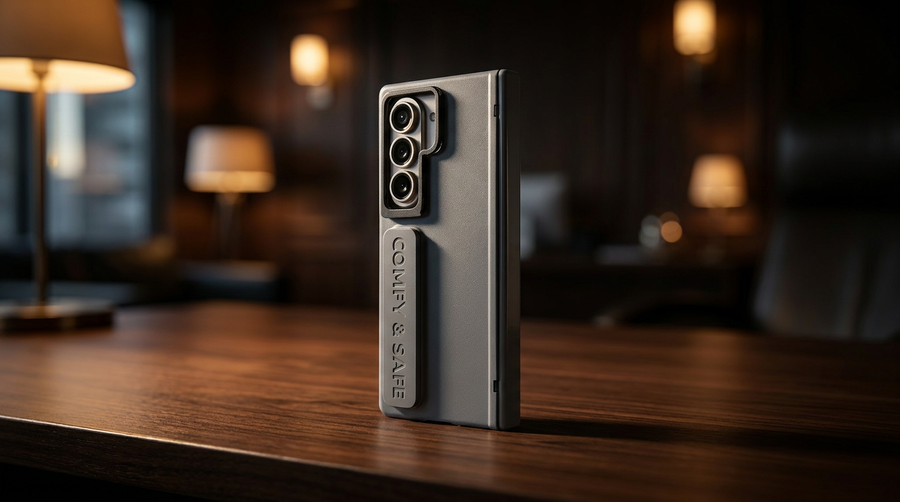
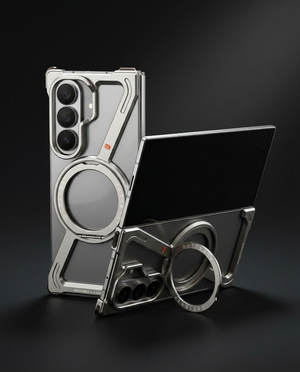
Protection matters here too. If you repair a foldable and keep using it bare, you are setting up for another expensive hit. A case made for hinge coverage is a better bet than a thin fashion shell. Start with heavy-duty phone cases that actually protect vulnerable edges and hinges.
DIY repair
DIY is where people try to save money after a painful quote. I get it. I still rarely recommend it for foldables.
On older standard phones, a careful DIY repair can be reasonable if the device is already near the end of its life and you can live with cosmetic flaws or a failed attempt. Foldables are different. The inner display is delicate, the adhesives are less forgiving, and small mistakes during opening or reassembly can affect the hinge, the crease, or the screen layers.
Samsung’s self-repair program has made parts and kits more available for some devices, but availability is not the same as simplicity. The weak point is not just installing the part. It is getting the phone back together with the right alignment and pressure, especially when the phone has already taken an impact.
DIY makes sense only if all of these are true:
- The phone is not mission-critical
- You already have repair experience
- You accept a real chance of failure
- Replacing the phone would not be a financial disaster
For a recent foldable with inner-screen damage, DIY is usually a risk transfer, not a savings strategy.
A side-by-side view
| Repair path | Best for | Main advantage | Main risk |
|---|---|---|---|
| Official manufacturer | Newer premium phones and foldables, especially inner-screen damage | Best chance of correct procedure, fit, and parts | Highest price |
| Third-party shop | Outer-screen repairs, older devices, and foldables handled by a proven specialist | Lower cost with decent service possible | Skill and parts quality vary a lot |
| DIY | Older standard phones and experienced hobbyists | Lowest upfront cost in some cases | High chance of worsening damage, especially on foldables |
How I’d decide
If a friend dropped a foldable and called me from the sidewalk, this is the filter I’d use:
- Inner screen damaged, crease changed, or hinge feels different: get an official quote first
- Outer screen only, hinge still feels normal, trusted foldable specialist available: third-party can make sense
- Repair quote is uncomfortably close to replacement value: stop and compare replacement options before approving anything
- DIY is only happening because you need the phone back tomorrow: skip it
One shop rule matters more than the rest. Ask what happens if the repair fixes the screen but the phone no longer folds or seals the same way afterward. The answer will tell you a lot about who should touch your foldable.
The Hidden Costs of a Broken Screen
The invoice is only the visible part.
A lot of people look at a repair quote and treat that number like the whole problem. It isn’t. The actual cost often includes time, lost work, backup hassle, travel, and the risk that your phone doesn’t come back exactly the way it left.

Downtime costs more than people expect
According to Rokform’s phone repair cost analysis, the total ownership cost beyond the repair invoice includes hidden expenses like downtime of 8-48 hours and data loss risks, which can triple the sticker price to $600-$1500 for professionals.
That’s a big deal if your phone is tied to your work.
If you use your phone for navigation, job photos, field reports, customer messages, authentication, or two-factor login, a broken screen doesn’t just create a repair bill. It interrupts how you move through your day.
The hidden list gets long fast
Here’s what often gets missed:
- Lost time: Dropping off the phone, waiting, and picking it up can eat half a day.
- Data anxiety: If you don’t have a fresh backup, every repair feels riskier.
- Work friction: Logging into accounts on a temporary device is rarely smooth.
- Water resistance uncertainty: Once a phone has been opened, especially a foldable, many owners become more cautious around moisture afterward.
At this point, prevention starts to look less like an accessory purchase and more like business continuity.
Foldables raise the stakes
A foldable makes downtime worse because you’re more likely to rely on it as a productivity device. People buy Z Fold models for multitasking, larger display use, reading plans, reviewing documents, and working on the move. When that screen breaks, you don’t just lose a phone. You lose your mobile workstation.
If you use your device in demanding environments, it’s worth reviewing rugged protection strategies like the options discussed in this guide to heavy-duty phone cases. The point isn’t style. It’s avoiding a repair event that spills into the rest of your week.
A screen repair may take hours. The disruption can last much longer.
That’s why the true broken phone screen repair cost is rarely just the repair counter number. For many people, the expensive part starts after they leave the shop.
The Best Repair Is No Repair How to Prevent Cracks
You drop a foldable once, pick it up, and immediately check two screens, the hinge, and the frame. That routine tells you everything. Preventing damage on a foldable is a different job than protecting a standard phone, because the expensive failure points are spread across the whole device, not just one front panel.
If you already priced a screen replacement, the math gets pretty clear. A better case and the right screen protection cost far less than one bad drop, especially if the inner display or hinge area takes the hit.

Why foldables need different protection
A foldable has more ways to get damaged.
The outer screen still faces the usual risks from drops, corners, and rough surfaces. The inner display adds another layer of concern because it sits beside a hinge system and a folding structure that have to stay aligned. A case that works fine on a slab phone can leave the most expensive part of a foldable exposed.
That is why generic phone protection advice often falls short here. On a foldable, the goal is not just to reduce scratches. The goal is to absorb impact, protect corners, and keep the hinge from taking a direct blow.
The two layers that matter most
A case that protects the hinge
For foldables, hinge protection deserves first priority.
A lot of cases look rugged online and still leave the hinge exposed in the one moment that matters. Good foldable cases do a few specific things well:
- Cover the hinge so drops do not hit the moving mechanism directly
- Add raised edges to keep the screen off concrete, tile, and rough tables
- Use shock-absorbing corners because corner drops crack screens fast
- Stay locked in place during opening and closing
- Hold up to daily wear instead of loosening after a few weeks
I tell foldable owners to shop for the failure point, not the color. If the hinge is exposed, the case is already making a compromise.
A screen protector that fits the panel
The second layer is a screen protector chosen for the actual surface you are covering.
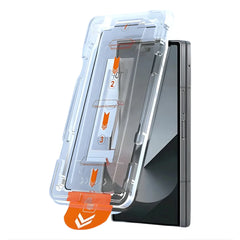
The outer screen usually gives you more options. The inner screen is different and needs more care, because flexibility matters as much as scratch resistance. If you want a practical breakdown of materials, this guide to tempered glass vs plastic screen protector helps explain why one type may suit the outer display while another makes more sense elsewhere.
A protector will not save every phone from every drop. It can still prevent the small damage that turns into a much larger repair bill later.
Habits that reduce risk
Protection is not only about accessories. Daily handling matters too.
Open the phone with clean hands. Keep it out of pockets or bags with keys, grit, or loose metal. Do not set it on unstable car seats, ladder tops, or the edge of a sink. Replace a cracked protector or stretched-out case before the next drop tests it for you.
Foldables also punish small neglect more than standard phones do. Dust around the hinge, a loose case, or a peeling protector may seem minor until impact exposes the weak spot.
What usually backfires
A few common choices give foldable owners false confidence:
- Thin fashion cases that protect the back but leave corners and hinge areas vulnerable
- Using the phone bare at home because many damaging drops happen during ordinary routines
- Keeping worn protection too long after it has already lost its fit or shock absorption
- Buying protection made for slab phones and assuming the same logic applies
The cheapest repair is still the one you avoid. With foldables, prevention is not overkill. It is the part of ownership that keeps a premium device from turning into a premium repair bill.
Your Lingering Screen Repair Questions Answered
How long does a typical screen repair take
It depends on the phone, the parts, and the shop’s workflow.
For a regular phone, many repairs are same-day if the part is in stock. For foldables, expect more caution. The process is more involved, and some shops may need extra time for parts verification, testing, or routing the device through a specialized center.
Will a third-party repair void my phone’s warranty
It can affect your warranty situation, especially if the repair creates issues tied to non-original parts or improper installation.
That doesn’t mean every independent repair is bad. It means you should ask questions before approving the job. On a foldable, that’s even more important because the screen, seals, and hinge area all interact.
Can I trade in a phone with a broken screen
Usually yes, but the value will be lower.
Whether that makes sense depends on the device, the extent of damage, and the trade-in offer. Sometimes a damaged phone still has decent value. Other times the discount is steep enough that repair looks more reasonable. If you’re weighing both options, compare the actual out-of-pocket result, not just the headline trade-in promise.
Is it worth repairing an older phone
Sometimes. Sometimes not.
The strongest case for repair is when the phone is otherwise in good shape, still performs well, and the repair quote feels proportionate. The weaker case is an older device with multiple issues, poor battery life, or a quote that feels too close to replacement territory.
Should I keep using the phone with a cracked screen
Only if it’s still safe and functional enough to do so briefly.
A small crack can become a bigger failure. Touch issues, dead pixels, flicker, or hinge stiffness are signs to stop pushing your luck. Back up your data first. Then decide from a calm position, not after the screen fully gives out.
Where can I get answers about accessories and compatibility
If you’re trying to sort out case fit, screen protector choices, shipping, or device support for foldable accessories, the FoldifyCase FAQ is a practical place to check common questions.
If you own a foldable, protection is cheaper than regret. FoldifyCase focuses on cases and accessories built for devices like the Galaxy Z Fold, Z Flip, and Pixel Fold, with the kind of hinge-conscious protection that makes more sense after you’ve seen what a screen repair really costs.
Shop FoldifyCase foldable phone cases
Precision cases for Galaxy Z Fold & Z Flip — full MagSafe, S-Pen ready, zero bulk.