
JournalComparativa
Apple iPhone Duo Case vs iPhone Duo Folio: Worth It?
Short answer
The Apple iPhone Duo Case (A$119 / US$79) is the better buy for most people: a thin two-part polycarbonate shell that sticks on with adhesive liners, leaves the titanium hinge exposed and works with MagSafe. The iPhone Duo Folio with Kickstand (A$199 / US$129) is worth it only if you will use its kickstand most days, because its TechWoven flap sits over the 5.4-inch outer display when the phone is shut. Apple describes a separate hinge cover on neither.
Want the hinge covered? Look at a hinge-cover case such as our Spineguard P1, Sentinel H2 or Axon M2.


By Priya Nair · FoldifyCase foldable case design team · Updated 4 November 2026
Up front: we design foldable cases, including cases for the iPhone Duo, so Apple’s two cases are our direct competition. We have tried to be fair to them anyway.
How we compared
We haven’t handled Apple’s iPhone Duo Case or Folio, and we haven’t measured a retail iPhone Duo. This comparison uses Apple’s product pages, newsroom and support documents, plus reporting we credit by name. Where Apple hasn’t said something, we say so. Updated on 4 November 2026 with Apple’s case setup and hinge troubleshooting guidance.


Apple iPhone Duo Case vs Folio: what’s the difference?
Apple announced both cases with the iPhone Duo on 9 September 2026. They have been available to order since 16 October, and the phone went on sale on 23 October. Here is what Apple has published about each, side by side.
| iPhone Duo Case | iPhone Duo Folio with Kickstand | |
|---|---|---|
| Price (Australia) | A$119 RRP inc. GST | A$199 RRP inc. GST |
| Price (US) | US$79 | US$129 |
| Colours | Navy blue, sand | Navy blue, taupe |
| Material | Polycarbonate with a matte coating | TechWoven, “a custom technical fabric” |
| Design | “Two-part case”, “wrapping around both sides of iPhone Duo to protect it from front to back” | “Thin and light”, with an integrated kickstand |
| How it goes on | Adhesive liners inside the case; apply the front cover, then the back cover | Apple’s setup guide covers the Case only |
| Outer display (5.4-inch) | Edge covered, face open; Apple adds a Shift Left Edge setting for it | Covered: the case “covers the back exterior and entire front exterior display” |
| Inner display (7.6-inch) | Folds shut inside the phone; not covered | Folds shut inside the phone; uncovered when open on the kickstand |
| Hinge | “Titanium hinge exposed” | No separate hinge cover described; the fabric back runs across the fold (iThinkDifferent) |
| Charging | Built-in magnets; MagSafe, Qi2 25W and Qi-certified chargers with the case on | The same, and you can charge “behind the open kickstand” |
| Kickstand | None | “A range of angles for reading, viewing, or making FaceTime calls”; it “snaps neatly back into place” |
| Weight | Not published | Not published |
The coverage and hinge rows quote Apple’s own descriptions of its Apple Store product photos. The biggest everyday difference is the outer display. The Case leaves its face open but overlaps its edge, which is why Apple added a setting for it. The Folio puts fabric over the whole outer display until you fold the flap back, as iThinkDifferent describes.
How do you put on Apple’s iPhone Duo Case?
With adhesive. Apple’s support guide, published on 27 October, gives these steps:
- Place the iPhone Duo outer display up on a clean, flat surface, and make sure it is free of dust or debris.
- Peel the adhesive liners from the inside of the case.
- Apply the front cover: align the top and bottom right corners, then press along the remaining edges.
- Apply the back cover: top edge (nearest the camera) first, then align the other edges and press gently.
Once the back cover is on, a prompt appears on the inner display. It points you to Settings > Display & Brightness > Shift Left Edge, which shifts the outer display’s content to make room for the front portion of the case. MacRumors reports that the setting roughly doubles the left border, and that you can turn it on manually for third-party cases too.
Apple’s guide doesn’t cover taking the case off or reusing the liners, so fit it once, carefully, on a dust-free phone.
Is the iPhone Duo Folio worth it?
It is worth it if you prop the phone open most days. Otherwise A$199 is a lot to pay for a kickstand and a cover over the outer display, with no more hinge protection described than the A$119 Case. The extra A$80 (US$50) buys three things:
- A kickstand that holds “a range of angles” for reading, video or FaceTime and snaps back flat. Apple says you can charge on MagSafe behind it while it is open, which is a thoughtful detail.
- Fabric over the outer display. Useful in a bag. The cost is that the 5.4-inch screen is the one you use most with the phone shut, and iThinkDifferent notes you have to fold the flap back to see anything on it.
- TechWoven instead of matte polycarbonate. We can’t tell you how either wears, because we haven’t used them.
It doesn’t buy edge or hinge protection. MacRumors says the Folio covers the back “rather than wrapping the edges”, and Apple describes no separate hinge cover. Our view: the Case is the better Apple buy for most people. Choose the Folio only if you will use the kickstand most days.
How much does the iPhone Duo Folio weigh?
Apple hasn’t published a weight for the Folio or the Case. Its product pages call both “thin and light” and stop there. We haven’t weighed either, so we won’t guess. Some retailer listings show a figure, but they don’t say whether it includes packaging, so treat those numbers with care.
What we can give you is the baseline. Apple lists the iPhone Duo at 254 g and 11.3 mm thick closed, and any case adds to both. As simple arithmetic, every 1 mm of material on each half adds about 2 mm to the closed thickness. Our iPhone Duo dimensions and specs guide has the full figures Apple published.
Is Apple’s iPhone Duo Case worth it?
Yes, for most people who want slim protection and can accept a bare hinge. Apple designed it alongside the phone, it is the cheaper of Apple’s two cases, and its two parts wrap both halves of the Duo, front to back.
The trade-offs: the titanium hinge is exposed, there is no stand, the face of the outer display is open, and the front piece overlaps the display edge enough that Apple added Shift Left Edge for it. It also goes on with adhesive, so take your time the first time.
If you’re worried about the hinge
Since launch day, MacRumors has reported owners’ inner displays cracking along the hinge, often with a line of bright or green pixels. Apple has said it is “aware of an issue impacting the inner display on a small number of iPhone Duo units” and that owners with display issues should contact AppleCare for a replacement. A case can’t fix or prevent a manufacturing defect, so if your screen shows that fault, go to Apple. If Apple asks you to troubleshoot the hinge, its first step is “Remove any third-party cases or screen protectors”.
What a case can do is keep dust, grit and knocks off the spine, and neither Apple case has a separate hinge cover. Our hinge-cover options for the Duo are the Spineguard P1 (a spring-loaded spine cover that slides as you fold), the Sentinel H2 (a rugged case whose spring-loaded hinge cover closes over the spine automatically) and the Axon M2 (a rigid wrap-around hinge cover with an aerospace-grade alloy frame). Our iPhone Duo hinge problems and screen cracks guide covers the reports, the fold tests and what IP68 doesn’t cover.
Apple’s cases vs the alternatives
Each of our cases below is made in a separate mould for the iPhone Duo, and the details come from each product page.
| Case | Hinge | Outer display | Stand | Magnets |
|---|---|---|---|---|
| Apple iPhone Duo Case | Exposed | Edge covered, face open | None | Built-in, MagSafe and Qi2 25W |
| Apple iPhone Duo Folio | No separate cover | Covered by a fabric flap | Integrated kickstand | Built-in, MagSafe and Qi2 25W |
| Spineguard P1 | Spring-loaded spine cover that slides as you fold | Built-in 9H tempered glass | Ring rotates 360° as a kickstand | N52 ring, MagSafe-compatible |
| Sentinel H2 | Spring-loaded cover that closes over the spine | Reinforced front frame, 2.30 mm raised bezel | Centre of the hinge cover flips out | Magnetic ring |
| Axon M2 | Rigid wrap-around hinge cover | Tempered-glass protector included (Duo version) | Metal ring folds out to 180° | N52 ring, MagSafe-compatible |
| Apex M3 | Left free (two-piece) | 1.1 mm raised lip | None | N52 ring, MagSafe-compatible |
| Axon M1 | Edge protection at the spine | Clear front frame | Ring opens to 170° | N52 ring, MagSafe-compatible |
Spineguard P1 vs Apple’s Folio: hinge cover plus MagSafe stand
The Spineguard P1 covers what the Folio leaves open. Its spring-loaded spine cover slides as you fold, so the hinge stays covered open, closed or anywhere between. The outer display sits under built-in 9H tempered glass, so there is no flap to move, and the N52 ring doubles as a 360-degree kickstand and grip.
Where Apple’s Folio wins: Apple designed it alongside the phone, its kickstand folds flat, you can charge behind it while it is open, and it has fewer moving parts.
Apex M3 vs Apple’s Case: the slim two-piece
The Apex M3 follows the same idea as Apple’s Case: separate front and back halves that leave the hinge free. It is soft-touch liquid silicone rather than matte polycarbonate, each half clips on rather than sticking on, and we publish its lips: 1.3 mm around the camera and 1.1 mm around the cover screen. Apple publishes neither figure.
Where Apple’s Case wins: Apple designed it alongside the phone, and some people prefer a hard matte shell to silicone.
Axon M1 vs both: the clear option
Apple’s Duo cases come in navy blue, sand and taupe, and neither is clear. The Axon M1 shows off the Duo’s star white or night sky finish through an anti-yellowing polycarbonate shell, with a ring that swivels a full turn as a grip and flips out to 170 degrees as a stand.
Where Apple wins: neither Apple case has a ring adding depth to the back, and the Axon M1 protects the hinge edge rather than covering it fully.
Which should you buy?
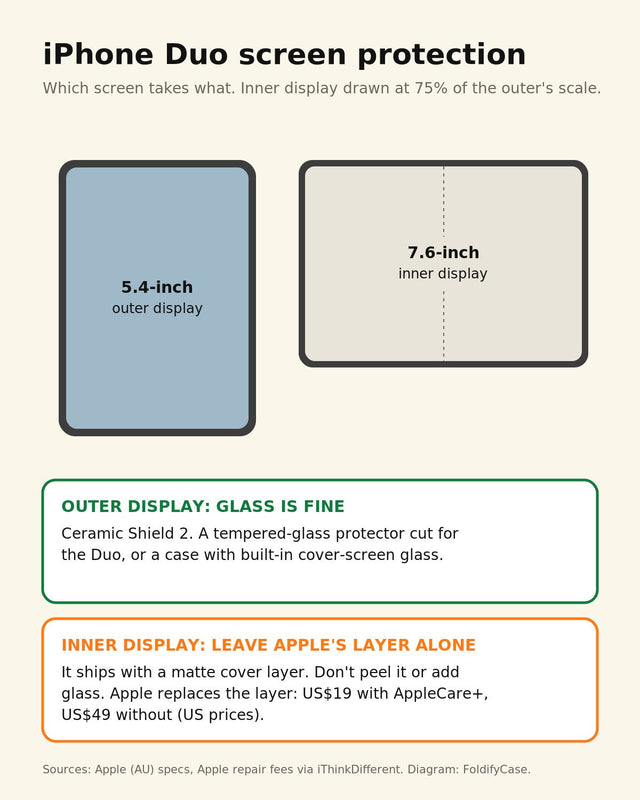
- Apple iPhone Duo Case: you want slim protection designed by Apple, you are happy fitting it with adhesive, and a bare hinge doesn’t worry you. If you want glass on the outer display, read our iPhone Duo screen protector guide first, and don’t peel the inner screen’s factory-fitted layer.
- Apple iPhone Duo Folio with Kickstand: you prop the phone open for video or FaceTime most days and like the outer display covered in a bag.
- Spineguard P1: the hinge is your main worry and you want built-in glass on the outer display. Apple has published no fold-cycle rating for the Duo.
- Sentinel H2: you want layered rugged protection and a hinge cover that doubles as the stand.
- Axon M2: you want a rigid hinge cover, a metal frame and a tempered-glass outer-display protector in the box.
- Apex M3: you like Apple’s two-piece idea but want a softer grip, published lip heights and no adhesive.
- Axon M1: you chose your Duo’s colour carefully and want to keep seeing it.
Compare every option in our best iPhone Duo cases guide or browse the iPhone Duo collection.
Made in a separate mould for the iPhone Duo
Our alternatives to Apple’s cases
Three different answers to the gaps in Apple’s two cases: a covered hinge, a softer two-piece and a clear shell.

Spineguard P1
Sliding spine cover, MagSafe ring kickstand and built-in cover-screen glass.
See the Spineguard P1

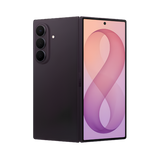
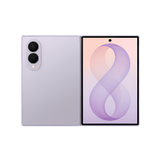
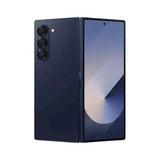
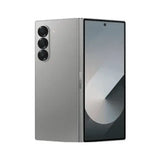
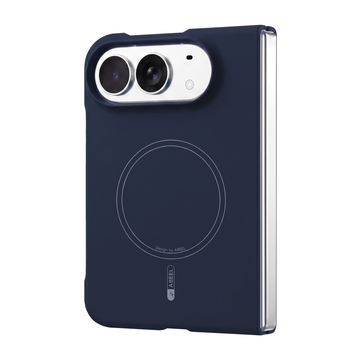
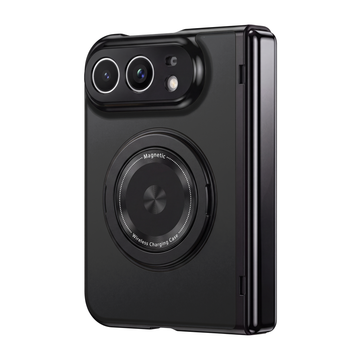
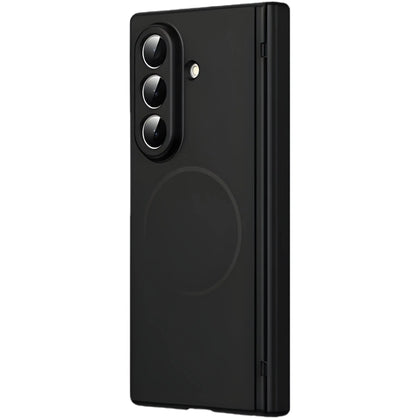
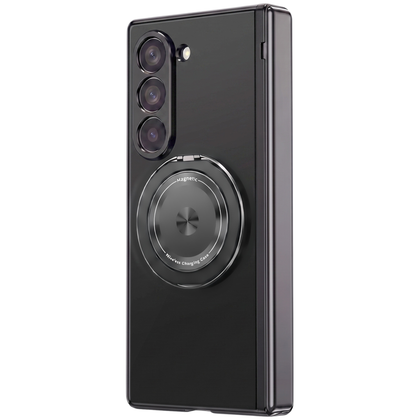
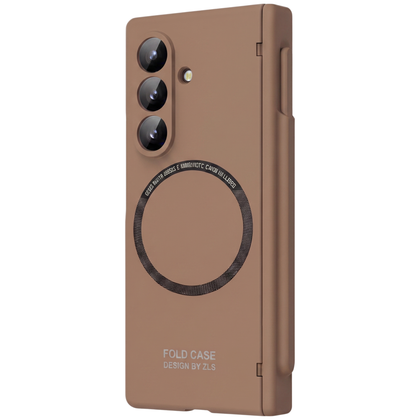
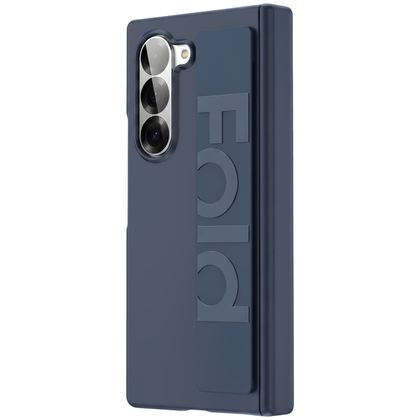
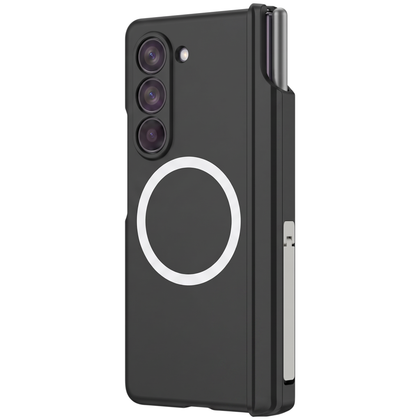
Product photos show the Galaxy Z Fold versions. The iPhone Duo version of each case is made in a separate mould for the iPhone Duo. See all iPhone Duo cases.
Frequently asked questions
Is the iPhone Duo Folio worth it?
Only if you will use the kickstand most days. The iPhone Duo Folio with Kickstand costs A$199 (US$129), A$80 more than Apple’s Case, and adds a kickstand you can charge behind plus a TechWoven flap over the outer display. It doesn’t add a separate hinge cover, and you fold the flap back to see the outer display.
What is the difference between the iPhone Duo Case and Folio?
The Case is a two-part polycarbonate shell that sticks on with adhesive, leaves the titanium hinge exposed and keeps the face of the outer display open. The Folio is a TechWoven fabric case with an integrated kickstand and a flap that covers the outer display. Both have built-in magnets for MagSafe, Qi2 25W and Qi-certified chargers.
How much does the iPhone Duo Folio weigh?
Apple hasn’t published a weight for the iPhone Duo Folio with Kickstand or the iPhone Duo Case. It describes both as thin and light, and we haven’t weighed either. Apple lists the iPhone Duo itself at 254 g and 11.3 mm thick closed, so any case adds to that. Retailer figures may include packaging.
How do you put on Apple’s iPhone Duo Case?
With adhesive. Apple’s support guide says to place the phone outer display up on a clean, flat surface, make sure it is free of dust, peel the adhesive liners from inside the case, apply the front cover, then apply the back cover. A prompt then points you to the Shift Left Edge setting.
What is Shift Left Edge on the iPhone Duo?
It is a setting in Settings > Display & Brightness that shifts the outer display’s content to make room for the front portion of a case. Apple’s iPhone Duo Case prompts you to turn it on after fitting. MacRumors reports it roughly doubles the left border, and you can switch it on manually for third-party cases.
Do Apple’s iPhone Duo cases cover the hinge?
Not with a separate hinge cover. Apple’s own product image of the folded Duo in the Case reads “titanium hinge exposed”. iThinkDifferent reports the Folio’s TechWoven back runs across the fold in one piece, but Apple describes no hinge cover. For a covered spine, look at a hinge-cover case such as the Spineguard P1, Sentinel H2 or Axon M2.
Does the iPhone Duo Folio cover the screen?
It covers the 5.4-inch outer display. Apple says the Folio covers “the back exterior and entire front exterior display”, so you fold the flap back to use that screen. The 7.6-inch inner display folds shut inside the phone when it is closed, and Apple shows it uncovered when the phone is open on the kickstand.
How much are Apple’s iPhone Duo cases in Australia?
The iPhone Duo Case is A$119 RRP in navy blue or sand, and the iPhone Duo Folio with Kickstand is A$199 RRP in navy blue or taupe, both including GST. In the US they are US$79 and US$129. Both have been available to order from Apple since 16 October 2026.
Related guides
- Best iPhone Duo cases (2026): our picks by use
- iPhone Duo hinge problems, screen cracks and what IP68 doesn’t cover
- iPhone Duo screen protector guide
- iPhone Duo dimensions and specs for case fit
- iPhone Duo MagSafe: chargers, wallets and mounts that fit
- Shop iPhone Duo cases
Sources
- Apple Newsroom Australia: Apple unveils iPhone Duo (A$ prices, colours, order date)
- Apple Store: iPhone Duo Case (material, design, charging, product image descriptions)
- Apple Store: iPhone Duo Folio with Kickstand (material, kickstand, charging, product image descriptions)
- Apple Support: How to set up iPhone Duo Case (27 October 2026)
- Apple Support: iPhone Duo troubleshooting hinge issues (27 October 2026)
- Apple Australia: iPhone Duo technical specifications
- MacRumors: iPhone Duo gets its own Case and Folio with Kickstand
- MacRumors: Adjust iPhone Duo’s outer display to accommodate your case
- MacRumors: iPhone Duo owners report screens breaking along the hinge
- iThinkDifferent: iPhone Duo Folio with Kickstand is going viral for its hinge
Product images of Apple’s iPhone Duo Case and Folio. Image: Apple, used unmodified for editorial purposes. Apple, iPhone, MagSafe, Touch ID and Apple Pencil are trademarks of Apple Inc. FaceTime is also a trademark of Apple Inc., and Qi2 is a trademark of the Wireless Power Consortium. FoldifyCase is not affiliated with or endorsed by Apple Inc.
Available now
iPhone Duo cases are here
Apex M3, Spineguard P1, Axon M1 and more — cut in a dedicated mould for the iPhone Duo.
Shop iPhone Duo casesFundas hechas
para plegar.
8 diseños de especialistas en plegables: magnéticas, con protección de bisagra, finas y con portalápiz, cada una a medida de tu modelo.
Ver las 8 fundas
-
 noviembre 2026
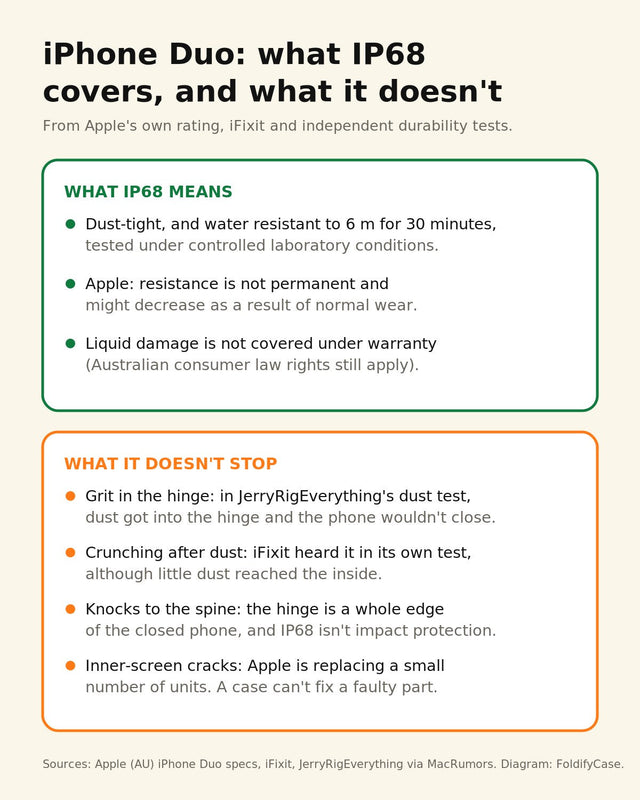
iPhone Duo Hinge Problems: Screen Cracks, Dust in the Hinge, and What IP68 Doesn't Cover
-
 noviembre 2026
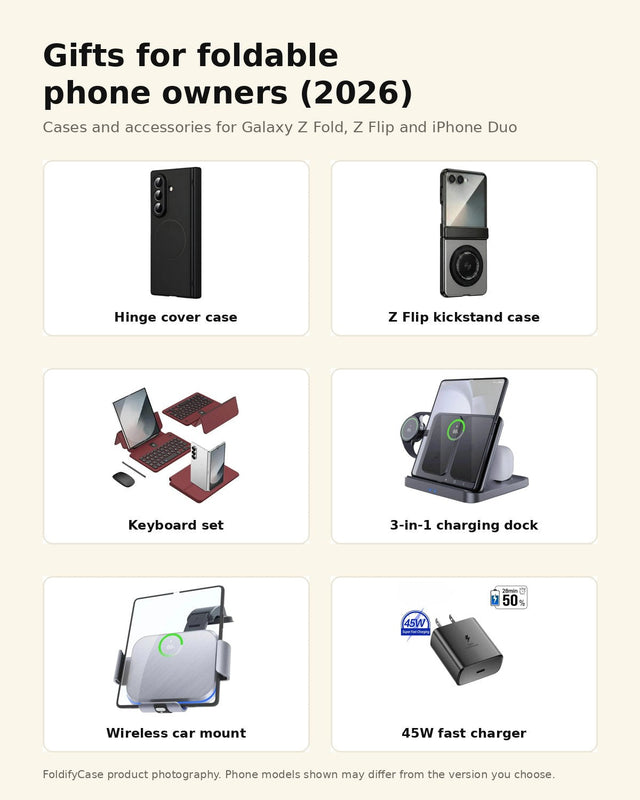
Gifts for Foldable Phone Owners (2026): Galaxy Z Fold, Z Flip and iPhone Duo Ideas
-
 noviembre 2026
iPhone Duo Screen Protector Guide: What Goes on the Outer Screen, and Why the Inner One Stays Bare